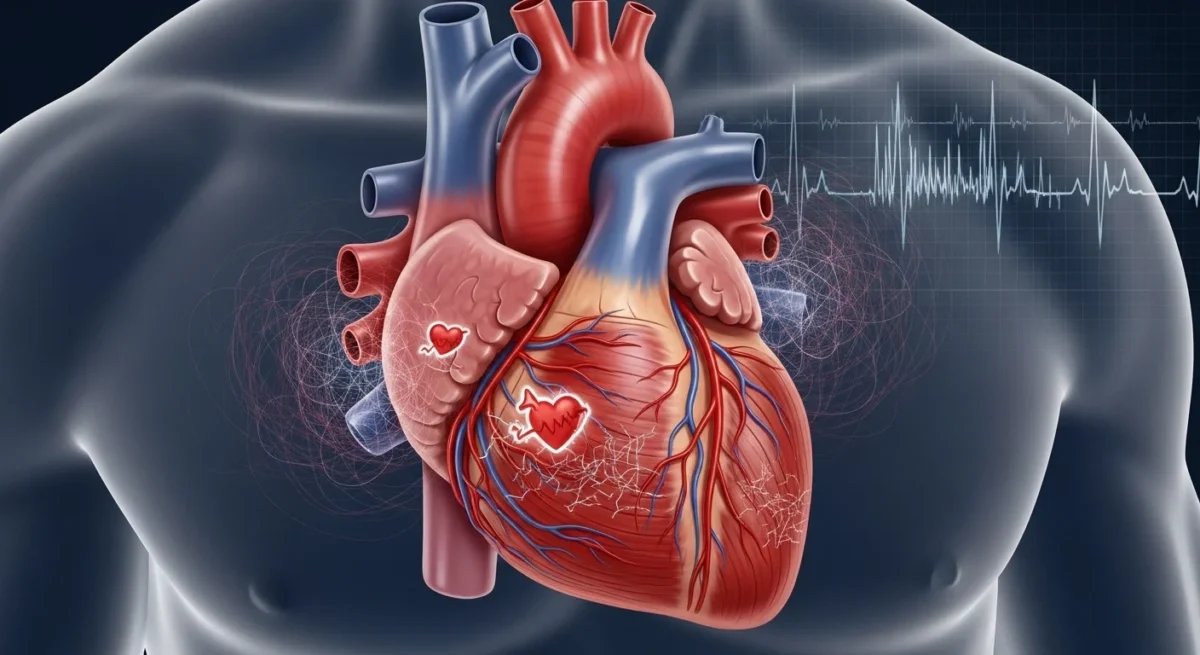
Have you ever felt your heart suddenly racing, fluttering, or skipping beats for no apparent reason? That alarming sensation could be a sign of AFib, or Atrial Fibrillation.
Many people first notice it as brief palpitations or dizziness, leaving them unsure whether it’s stress, caffeine, anxiety, or something more serious.
Quick Answer:
AFib stands for Atrial Fibrillation. It is a medical condition where the heart beats irregularly or too fast, often causing heart palpitations, fluttering, dizziness, or shortness of breath.
Understanding how it feels and recognizing the warning signs can help prevent serious complications.
🧠 What Does AFib Feel Like?
Atrial Fibrillation (AFib) is a type of irregular heartbeat (arrhythmia). The heart’s upper chambers (atria) beat chaotically, causing inefficient blood flow to the rest of the body.
Common AFib Symptoms
- 💓 Heart palpitations – rapid or pounding heartbeat
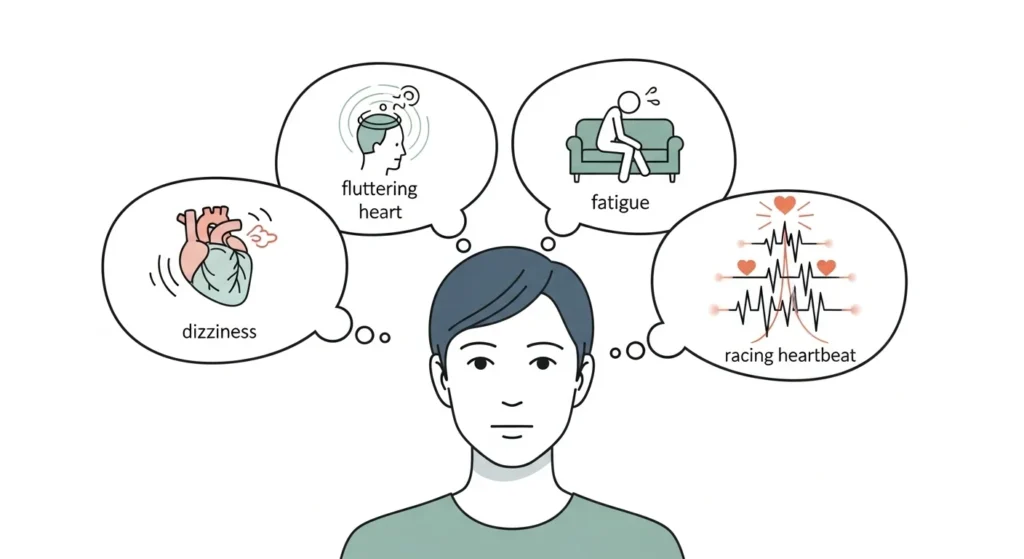
- 🔄 Fluttering in the chest – feels like skipped or extra beats
- ⏱ Rapid heart rate – sometimes more than 100–175 bpm
- 😵 Dizziness or lightheadedness
- 💨 Shortness of breath, even at rest
- 😴 Fatigue or weakness
In short: AFib = Atrial Fibrillation = irregular and often fast heartbeat that may cause fluttering, palpitations, dizziness, and breathlessness.
📌 AFib Symptoms by Type
1️. Paroxysmal AFib
- Comes and goes, lasting minutes to hours
- Symptoms may be sudden and intense
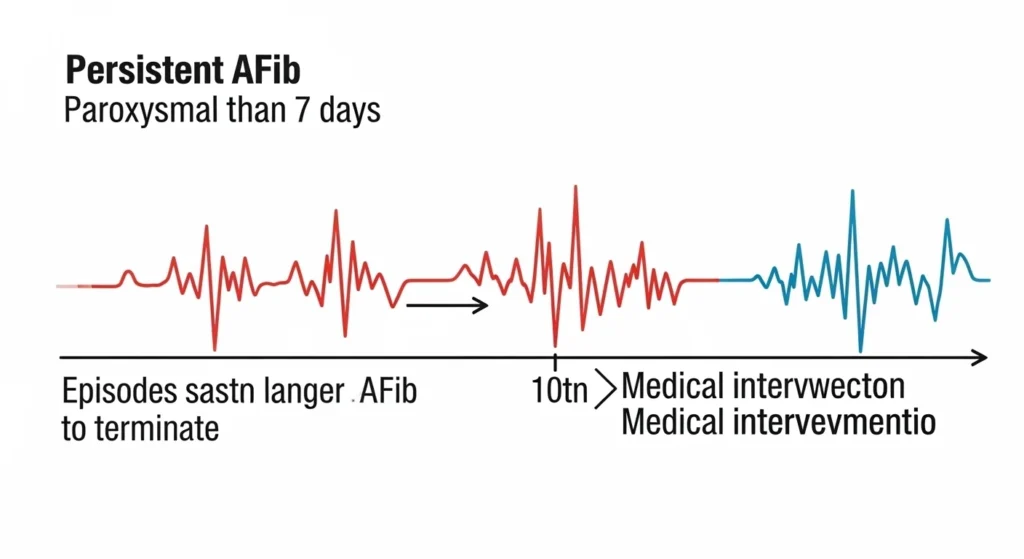
2️. Persistent AFib
- Lasts longer than 7 days
- Usually requires treatment
3️. Permanent AFib
- Continuous irregular heartbeat
- Managed with medication and lifestyle adjustments
🌙 AFib Symptoms at Night
Many people notice AFib episodes at night, particularly when lying down:
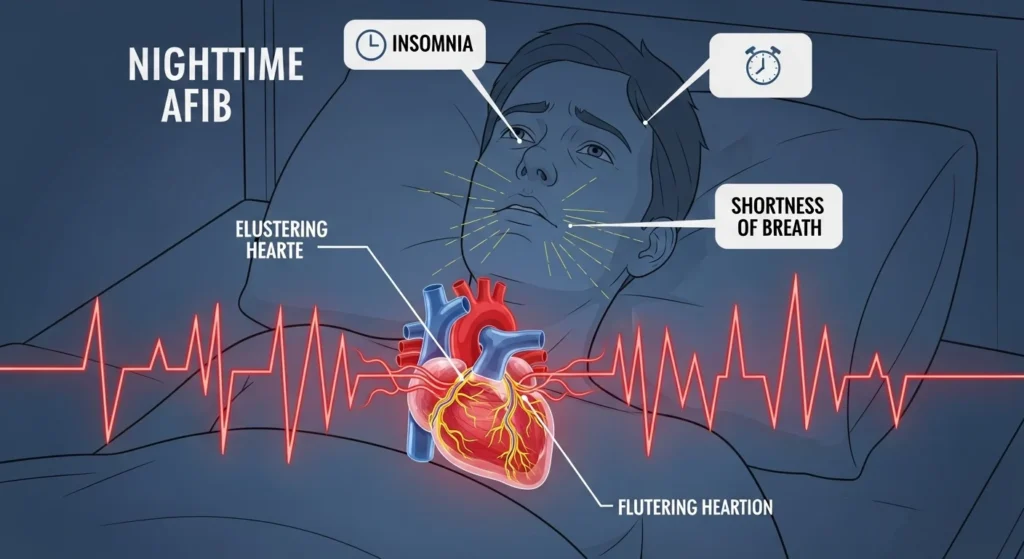
- Racing or fluttering heartbeat
- Sudden awakening due to palpitations
- Shortness of breath while resting
Tracking nighttime triggers, like stress, alcohol, or caffeine, may help reduce episodes.
⚠️ When to Seek Medical Help
Some AFib episodes are mild, but certain signs require immediate medical attention:
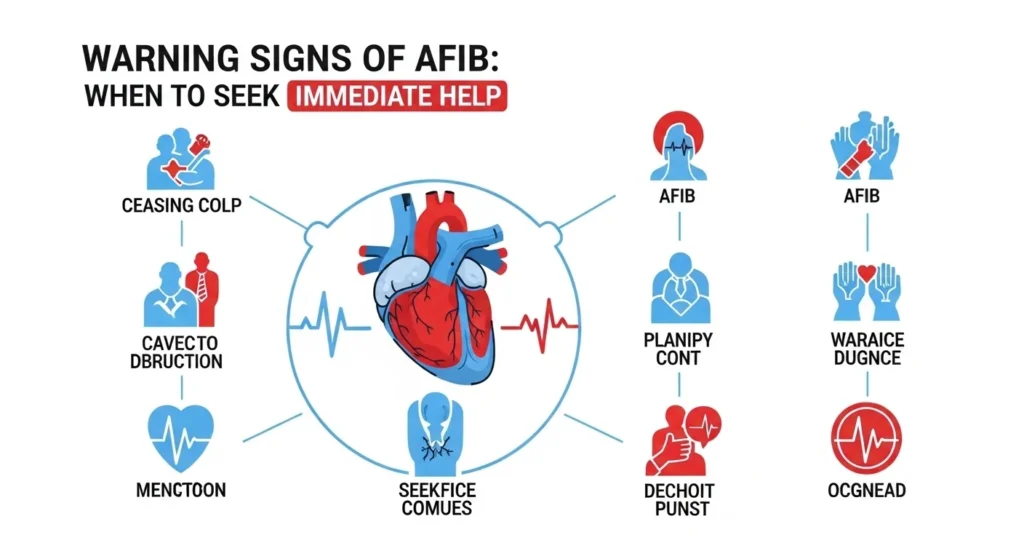
Call emergency services if you experience:
- Chest pain or pressure
- Severe shortness of breath
- Fainting or loss of consciousness
- Sudden weakness, numbness, or slurred speech (possible stroke)
Early diagnosis significantly reduces stroke risk and prevents heart failure.
🤔 AFib vs Anxiety Symptoms
Many people wonder: “Does AFib feel like a panic attack?”
| Symptom | AFib | Anxiety |
| Rapid heartbeat | ✅ | ✅ |
| Irregular heartbeat | ✅ | ❌ |
| Triggered by stress | Sometimes | Usually |
| Random episodes at rest | Common | Less common |
Key point: AFib causes an irregular pulse, while anxiety usually increases heart rate but maintains rhythm.
🩺 How Do You Know If You Have AFib?
To confirm AFib, doctors typically use:
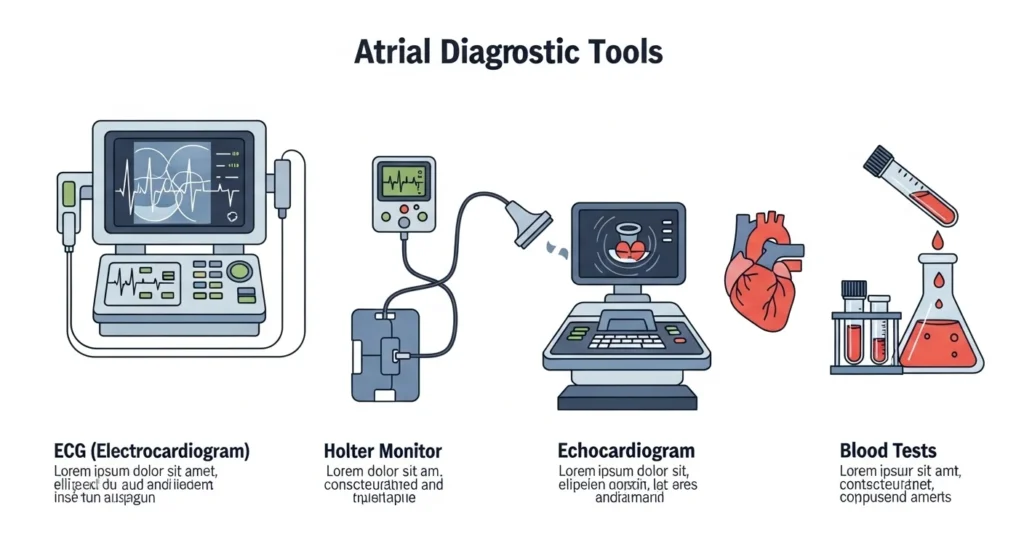
- Electrocardiogram (ECG) – records heartbeat rhythm
- Holter monitor – 24–48 hour continuous heart tracking
- Echocardiogram – checks heart structure and function
- Blood tests – identify underlying causes
Silent or mild AFib can go unnoticed, so routine check-ups are important for at-risk individuals.
💊 How Is AFib Treated?
Treatment depends on AFib severity and overall health:
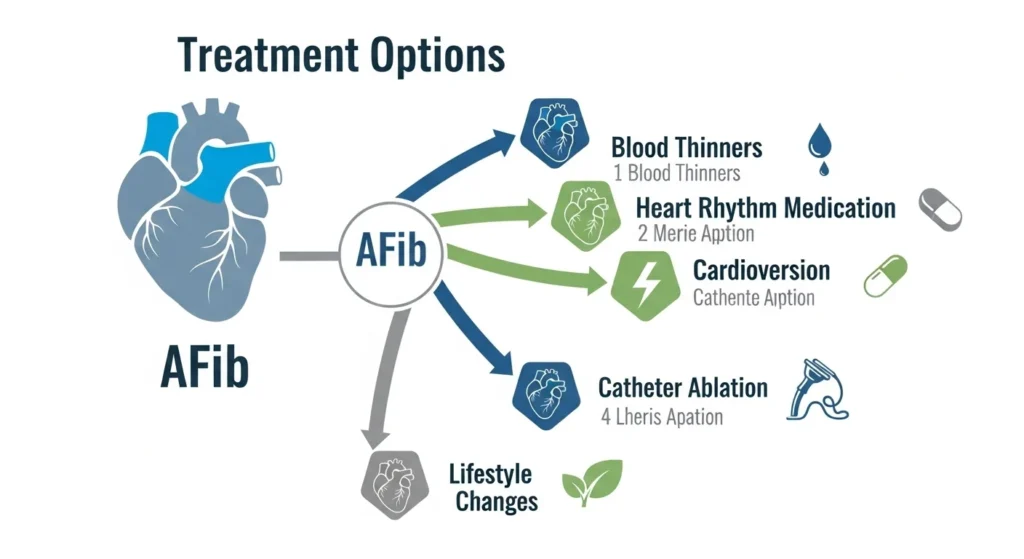
- Blood thinners – reduce stroke risk
- Heart rhythm medications – control heartbeat
- Cardioversion – electrical reset of the heart rhythm
- Catheter ablation – procedure to correct electrical signals
- Lifestyle changes – reduce caffeine/alcohol, manage stress, maintain healthy sleep
With proper management, many people live normal, active lives.
🧘 Lifestyle Tips to Reduce AFib Episodes
- Limit caffeine and alcohol intake
- Maintain healthy blood pressure
- Manage stress through meditation or yoga
- Exercise regularly
- Improve sleep quality
- Track personal triggers to prevent episodes
📊 Real Life Descriptions of AFib
People experiencing AFib often describe:
- “My heart felt like it was flipping in my chest.”
- “It was racing out of nowhere, and I felt dizzy.”
- “I thought I was having a panic attack, but my heart was irregular.”
- “I suddenly felt weak and short of breath.”
- “It came and went randomly, lasting a few minutes to hours.”
❓ FAQs About What AFib Feels Like
Q1: Can AFib feel like skipped beats?
Yes. Many people notice skipped or extra beats, which is characteristic of an irregular pulse.
Q2: How long do AFib episodes last?
They can last minutes, hours, days, or be ongoing depending on the type.
Q3: Can AFib go away on its own?
Paroxysmal AFib sometimes resolves spontaneously, but medical evaluation is essential.
Q4: Is AFib life-threatening?
It increases stroke risk and may lead to heart failure if untreated. Early management is critical.
Q5: What triggers AFib episodes?
High blood pressure, stress, caffeine, alcohol, sleep apnea, and thyroid problems are common triggers.
📝 Conclusion
AFib feels different for everyone, but typically includes heart fluttering, palpitations, irregular heartbeat, dizziness, and shortness of breath. Episodes may be brief or long lasting and can sometimes be confused with anxiety.
Important: Don’t ignore unusual heart sensations. Early diagnosis, lifestyle changes, and treatment can significantly reduce stroke and heart failure risk.
If you feel persistent AFib symptoms, consult a healthcare professional immediately. Your heart’s rhythm is a vital signal listen to it. ❤️🩹

Andrew Michael is a visionary thinker and passionate creator, focused on turning bold ideas into real-world impact. His creativity and dedication inspire others to grow, achieve, and make a difference.
Leave a Comment