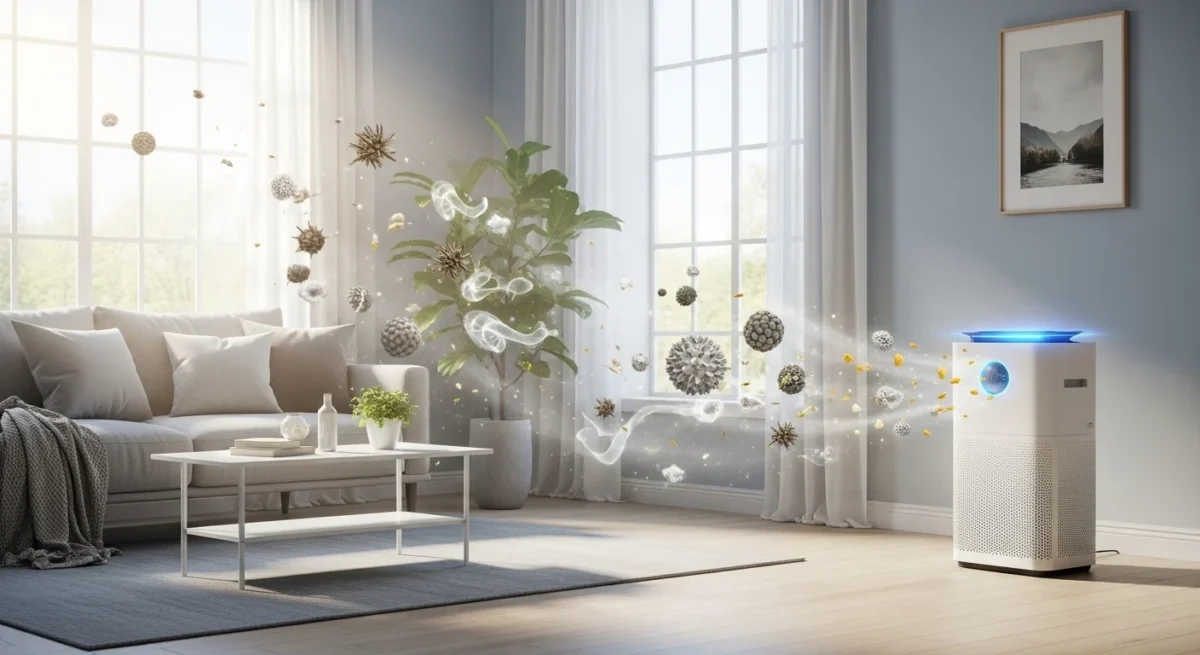
Have you ever noticed dust floating in sunlight or smelled smoke lingering in a room and wondered how to get rid of it? Many people start searching for solutions when allergies, pollution, or indoor odors become a problem.
That’s when the question usually pops up: what does an air purifier do, and can it really make the air inside your home cleaner?
With growing awareness about indoor air quality, air purifiers have become popular in homes, offices, and bedrooms.
But many people still aren’t sure how they actually work or whether they’re worth buying.
Quick Answer:
An air purifier is a device that improves indoor air quality by removing pollutants like dust, pollen, smoke, pet dander, bacteria, and odors from the air.
It works by pulling air through filters such as HEPA filters and activated carbon, trapping harmful particles and releasing cleaner air back into the room.
🧠 What Does an Air Purifier Do?
If you’re wondering what does an air purifier do, the main purpose is simple: it cleans the air inside your home.
Air purifiers act as an air filtration system that removes airborne pollutants that can affect health and comfort. These pollutants include dust, pollen, smoke, pet dander, mold spores, and even certain bacteria.
The device constantly circulates the air in a room. It pulls contaminated air into the purifier, filters it through multiple layers, and releases clean indoor air back into the environment.
Example sentence:
“After using an air purifier for a few weeks, the dust in my room decreased and my allergies improved.”
In short:
Air purifier = air cleaning device that removes pollutants and improves indoor air quality.
⚙️ How Do Air Purifiers Work? (Step-by-Step)
To fully understand how air purifiers clean the air, it helps to see the process step by step.
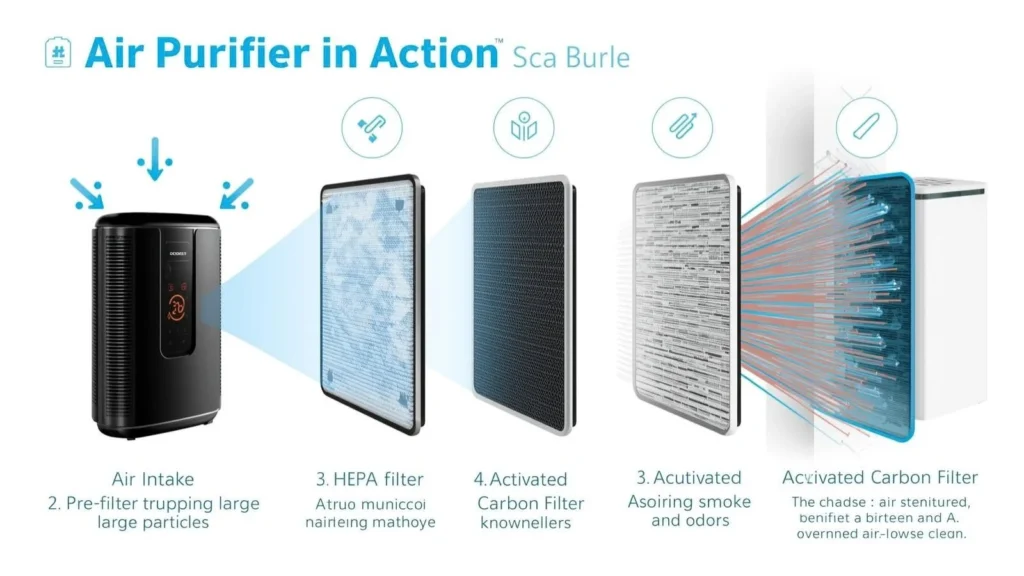
1️⃣ Air Intake
The purifier pulls air from the room using a fan.
2️⃣ Pre-Filter Stage
A pre-filter captures larger particles such as dust, hair, and lint.
3️⃣ HEPA Filter Filtration
A HEPA filter air purifier captures tiny particles like pollen, mold spores, and allergens. These filters can remove up to 99.97% of microscopic particles.
4️⃣ Activated Carbon Filter
This layer absorbs smoke, odors, and harmful gases, helping eliminate cooking smells and cigarette smoke.
5️⃣ Clean Air Release
The purifier releases cleaner, filtered air back into the room.
This continuous cycle gradually improves indoor air quality and reduces airborne pollutants.
🌫️ What Pollutants Do Air Purifiers Remove?
One of the biggest air purifier benefits is its ability to remove many types of airborne particles.
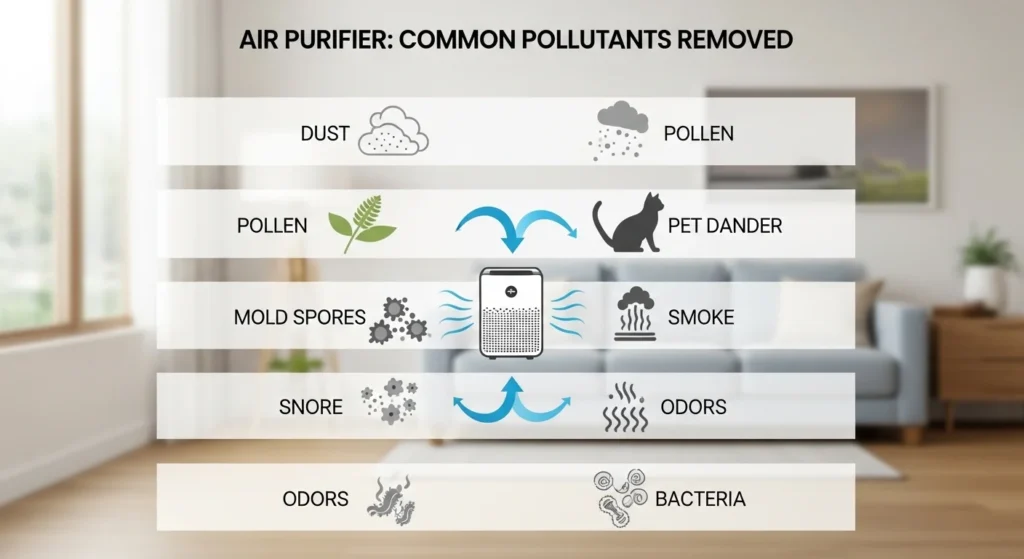
Air purifiers commonly remove:
- Dust and fine particles
- Pollen from plants
- Pet dander
- Mold spores
- Smoke particles
- Cooking odors
- Airborne allergens
- Certain bacteria and pollutants
Because of these capabilities, many people use air purifiers for dust and smoke, especially in urban areas with pollution.
⭐ Benefits of Air Purifiers for Home
There are many reasons why people choose to install an air purifier for home use. The benefits go beyond just cleaner air.
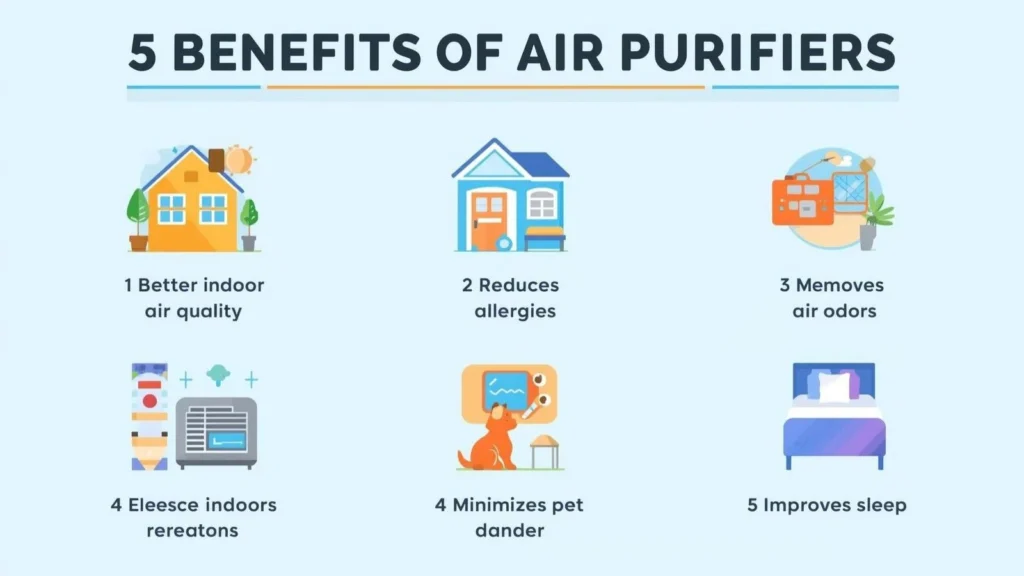
1. Improves Indoor Air Quality
Air purifiers remove pollutants and help maintain healthier indoor air.
2. Helps Reduce Allergy Symptoms
One of the most important air purifier benefits for allergies is reducing pollen, dust mites, and pet dander.
3. Removes Odors
With activated carbon filters, air purifiers can eliminate smells from pets, smoke, and cooking.
4. Reduces Pet Dander
Pet owners often use air purifiers to minimize airborne fur and allergens.
5. Supports Better Sleep
Cleaner air in bedrooms can make breathing easier and improve sleep quality.
Because of these benefits, air purifiers are often recommended for people with asthma or respiratory sensitivities.
🏠 Where Are Air Purifiers Commonly Used?
Air purifiers can be used in many indoor environments where air quality matters.
Common places include:
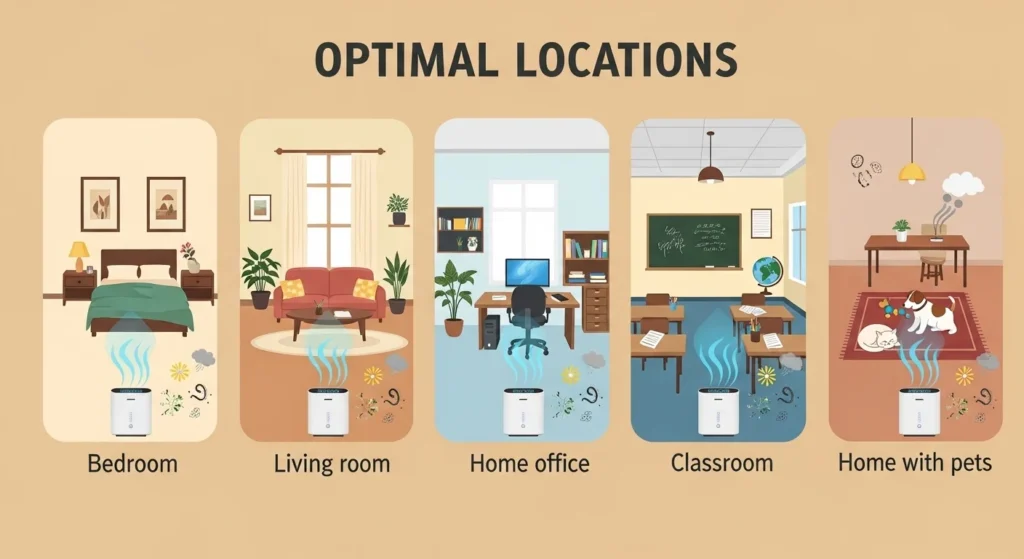
- 🛏️ Bedrooms – improves sleep and breathing comfort
- 🏠 Living rooms – reduces dust and indoor pollution
- 🐶 Homes with pets – controls pet dander and odors
- 🏢 Offices – improves workplace air quality
- 🏫 Schools – reduces allergens in classrooms
- 🌫️ Polluted cities – filters outdoor pollutants entering homes
Since people spend most of their time indoors, improving indoor air purification can significantly affect overall health.
⚖️ Air Purifier vs Other Air Devices
Many people confuse air purifiers with other home air devices. Here’s a quick comparison.
| Device | What It Does | Best Use |
| Air Purifier | Filters pollutants and allergens | Improve indoor air quality |
| Humidifier | Adds moisture to dry air | Dry climates or winter |
| Dehumidifier | Removes excess moisture | Damp basements or humid areas |
| Air Conditioner | Cools and circulates air | Temperature control |
| Fan | Moves air around the room | Cooling and airflow |
This comparison shows that only air purifiers actually remove airborne pollutants.
🤔 Do Air Purifiers Really Work?
A common question people ask is “do air purifiers really work?”
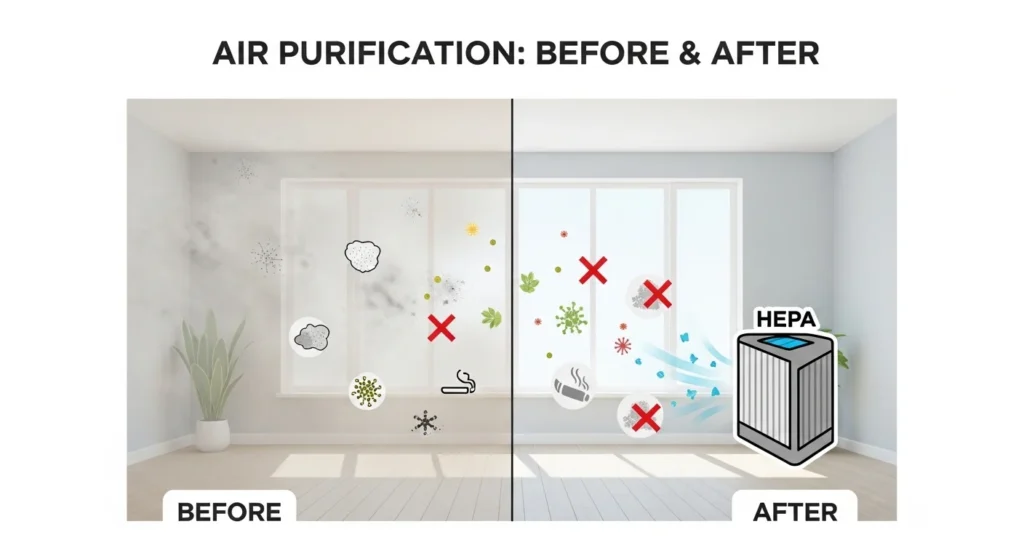
Yes, they do — especially those with HEPA filters. Studies have shown that HEPA filtration can capture up to 99.97% of airborne particles as small as 0.3 microns.
However, their effectiveness depends on:
- Room size
- Filter quality
- Air purifier placement
- Regular filter replacement
When used correctly, air purifiers can significantly improve clean indoor air and reduce airborne irritants.
🕓 When Should You Use an Air Purifier?
Air purifiers are most useful in certain situations.
✅ When to Use One
- If you suffer from allergies or asthma
- If your home has pets
- If you live in an area with high pollution
- If smoke or cooking odors linger in your home
- If dust builds up quickly
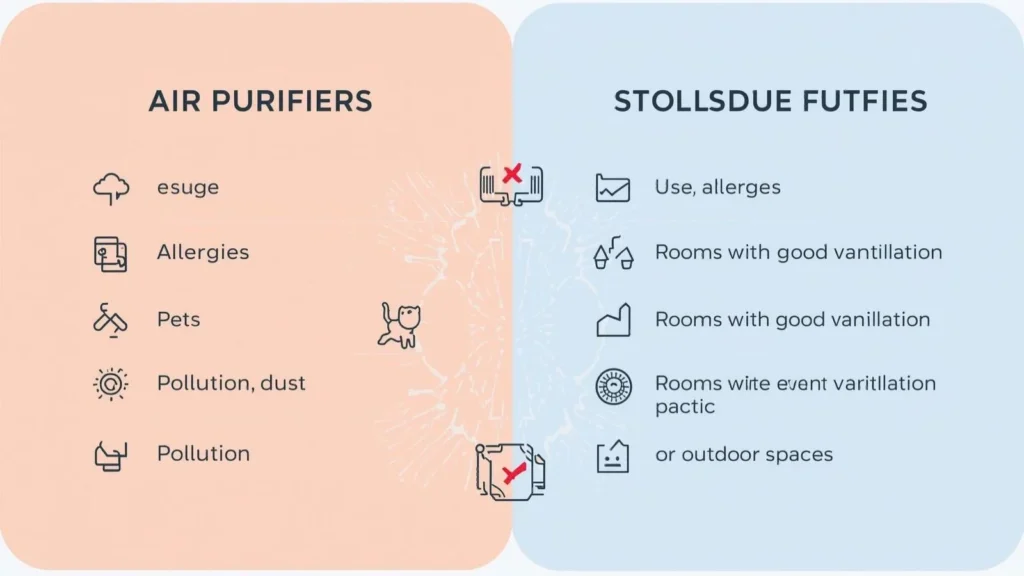
❌ When It May Not Be Necessary
- Rooms with excellent natural ventilation
- Very large spaces beyond the purifier’s coverage
- Outdoor environments
❓ FAQs About What an Air Purifier Does
Do air purifiers remove dust?
Yes. Air purifiers with HEPA filters are highly effective at trapping dust particles and preventing them from circulating in the air.
Are air purifiers good for allergies?
Yes. They remove allergens like pollen, pet dander, and mold spores, which helps reduce allergy symptoms.
Do air purifiers remove smells?
Air purifiers with activated carbon filters can absorb smoke, cooking odors, and pet smells.
Are air purifiers safe to run all night?
Yes. Most modern air purifiers are designed to run continuously and are safe to use overnight.
How long does it take for an air purifier to clean a room?
Depending on the model and room size, an air purifier may start improving air quality within 30 minutes to a few hours.
Conclusion: What Does an Air Purifier Do?
So, what does an air purifier do in your home? Simply put, it works as an air filtration system that removes pollutants, allergens, smoke, and odors from indoor air.
By continuously pulling air through HEPA filters and activated carbon filters, air purifiers help create cleaner and healthier indoor air.
This makes them especially valuable for people with allergies, asthma, pets, or homes in polluted areas.
While air purifiers aren’t a replacement for ventilation or regular cleaning, they are a powerful tool for improving indoor air quality.
If you want fresher air and fewer airborne irritants in your home, investing in an air purifier can make a noticeable difference in comfort and health. 🌿

Ethan Harper is a creative innovator with a passion for growth, storytelling, and purposeful success. He turns fresh ideas into lasting impact through vision, dedication, and authenticity.
Leave a Comment