The first time I searched “what does erp stand for”, I had just seen it in a job listing. It said, “ERP experience required.” I paused. Was it a tech skill? A finance tool? Some kind of management software?
If you’ve seen ERP in a business email, LinkedIn post, interview question, or company website and felt unsure, you’re not alone.
ERP is a common term in business and technology but many people don’t fully understand what it actually means. Let’s break it down clearly and simply.
Quick Answer:
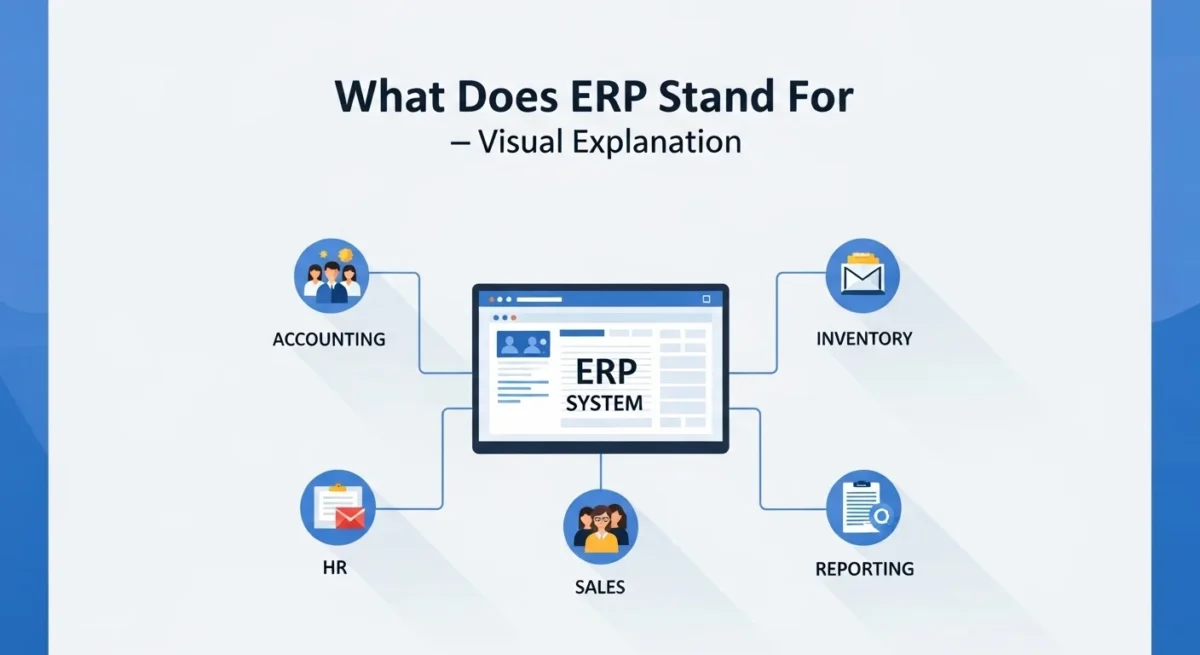
ERP stands for Enterprise Resource Planning a type of software businesses use to manage core processes like accounting, HR, inventory, sales, and operations in one integrated system.
ERP Full Form and Meaning in Simple Words
The ERP full form is Enterprise Resource Planning.
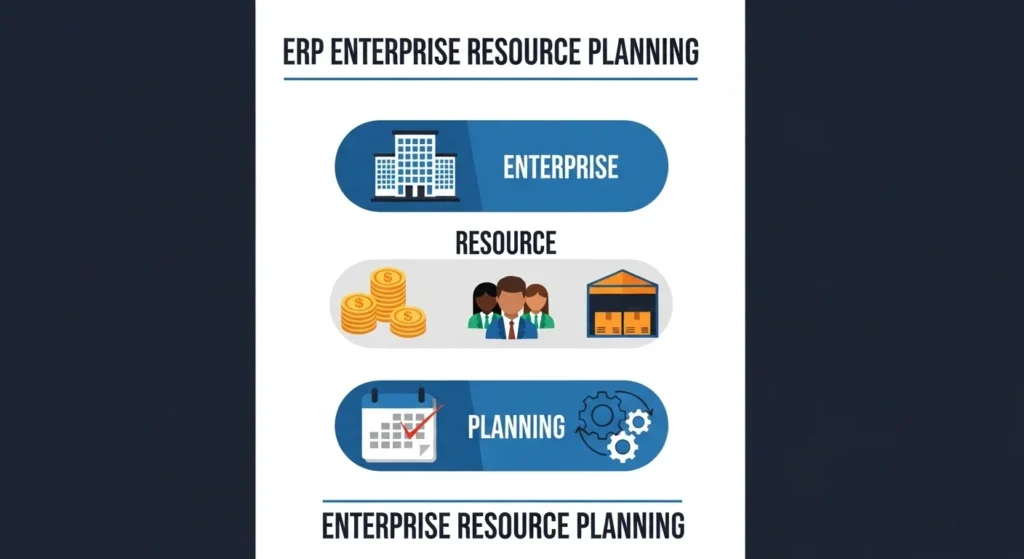
Here’s what that means in plain English:
- Enterprise = a company or business
- Resource = money, employees, products, data
- Planning = organizing and managing those resources
So, the enterprise resource planning meaning is simple:
It is software that helps a company organize and manage all its important activities in one place.
Instead of using different tools for payroll, stock tracking, accounting, and sales, a business can use ERP software to connect everything together.
In short: ERP is business management software that integrates all major company processes into one system.
What Is ERP Software?
When people ask, what is ERP?, they usually mean ERP software.
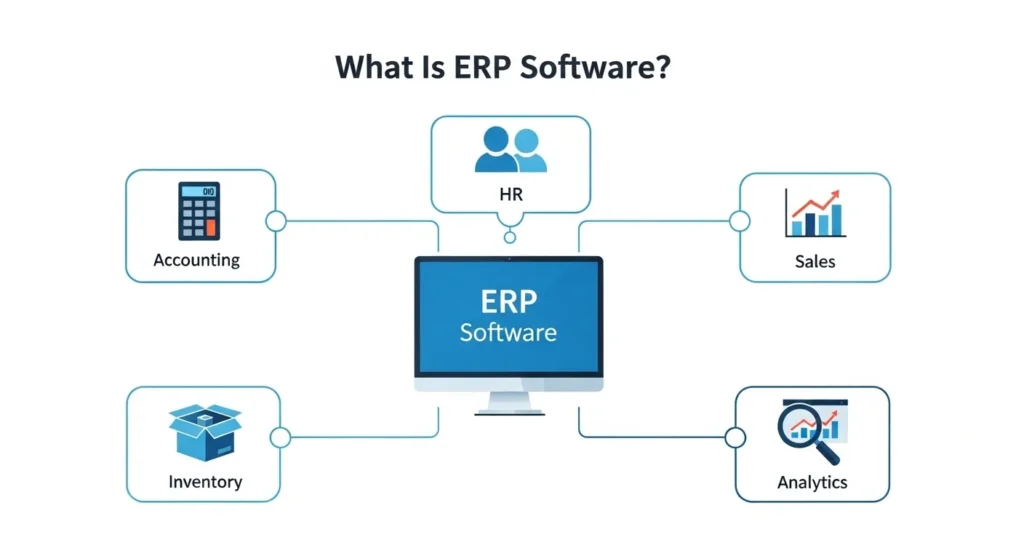
ERP software is an integrated business system that:
- Tracks financial data
- Manages employee records
- Monitors inventory
- Processes sales orders
- Generates reports
- Supports decision-making
Think of ERP as the “central brain” of a company.
Every department HR, finance, sales, operations works inside the same system. That means information updates automatically across the entire organization.
How Does ERP Work?
Many people also search: how does ERP work?
Here’s the simple explanation:
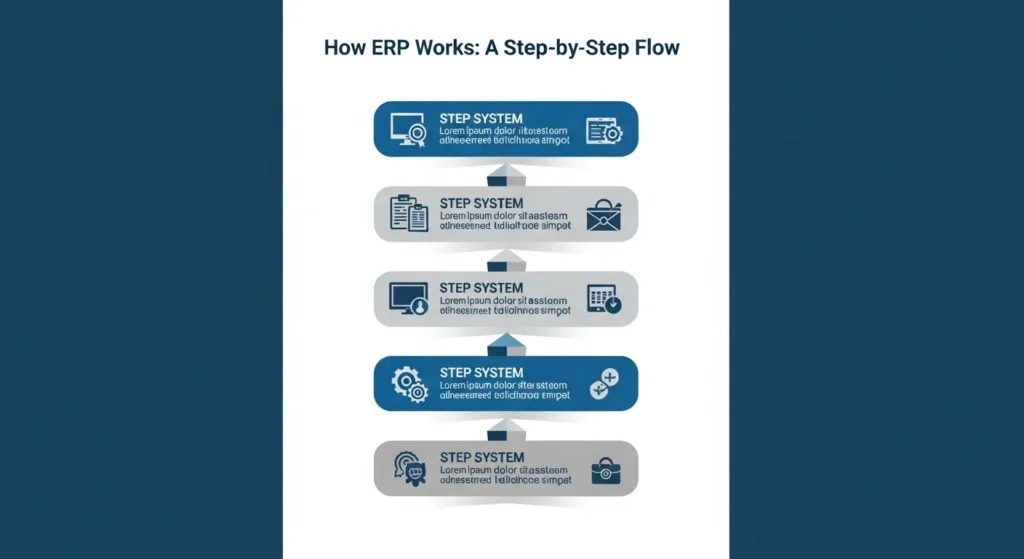
ERP systems use a shared database. When one department enters information, other departments can see updated data instantly.
For example:
- Sales enters a customer order.
- Inventory checks product availability.
- Accounting records the payment.
- Management sees updated revenue reports.
Everything happens in one connected system.
This process is called business process automation, and it reduces manual work and mistakes.
Key Features of an ERP System
A typical ERP system includes:
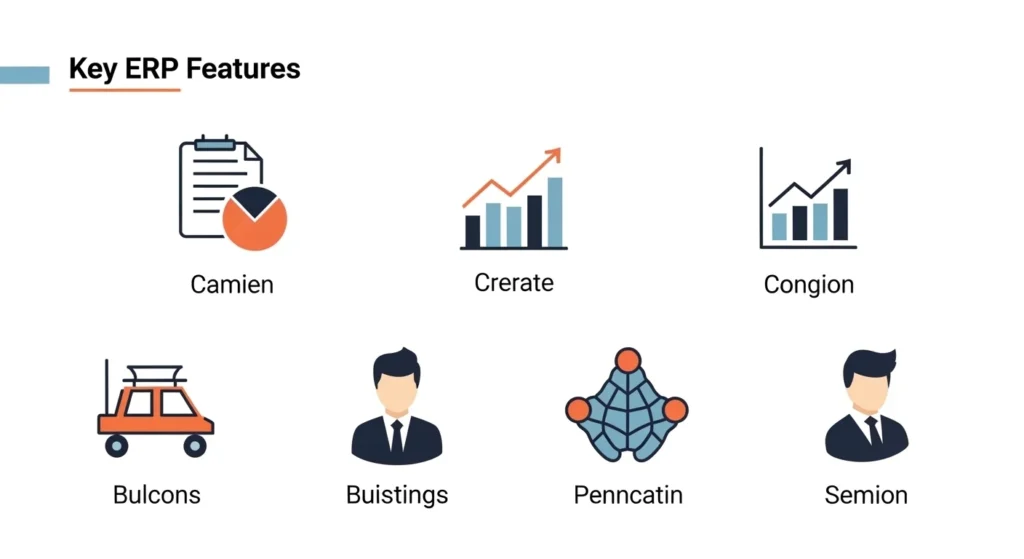
- Accounting and finance management
- Human resource management (HR & payroll systems)
- Inventory management
- Supply chain management
- Sales and order processing
- Reporting and analytics
Because all modules are connected, ERP improves efficiency across the entire organization.
Types of ERP Systems
To fully understand ERP, it helps to know there are different types.
1. On-Premise ERP
Installed on company servers.
Businesses manage hardware, updates, and security themselves.
2. Cloud ERP
Hosted online.
Companies access it through the internet. This option is popular because it is scalable and cost-effective.
3. Hybrid ERP
A mix of on-premise and cloud systems.
Today, many companies prefer cloud-based enterprise software solutions because they are easier to maintain and upgrade.
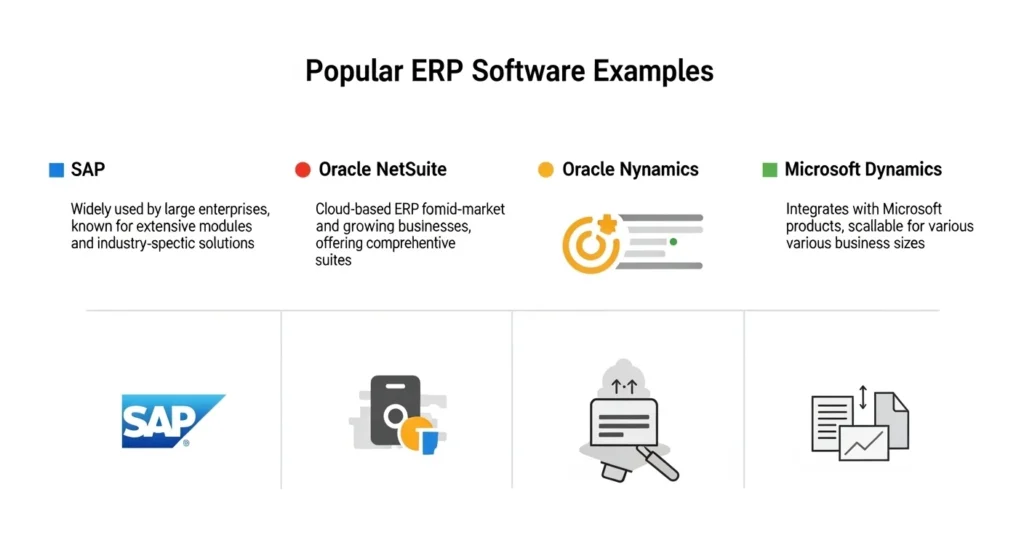
Examples of Popular ERP Software
Here are well-known ERP systems used worldwide:
- SAP ERP
- Oracle NetSuite
- Microsoft Dynamics 365
- Infor ERP
- Odoo
These platforms serve different industries and company sizes.
If you see a job listing asking for ERP experience, it usually means experience with one of these systems.
Industries That Use ERP
ERP is used in many industries, including:
- Manufacturing
- Retail
- Healthcare
- Education
- Construction
- Logistics
- Finance
Any organization that manages multiple departments and large amounts of data can benefit from ERP.
Benefits of ERP System
Businesses invest in ERP because of its advantages.
Here are the main benefits of ERP system:
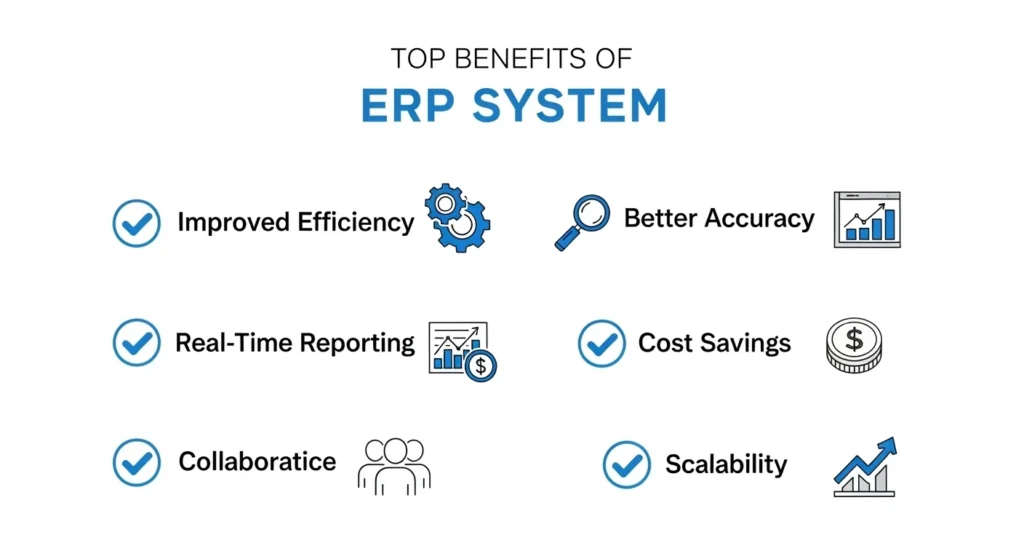
1. Improved Efficiency
Automation reduces manual tasks.
2. Better Data Accuracy
One shared system reduces errors.
3. Real-Time Reporting
Managers can make faster decisions.
4. Cost Savings
Eliminates duplicate systems and inefficiencies.
5. Department Collaboration
All teams work with the same updated information.
6. Scalability
ERP systems grow with the business.
These benefits explain why companies use ERP as they expand.
ERP Example in Real Life
Let’s look at a simple ERP example in real life.
Imagine a clothing company:
- A customer buys a jacket online.
- Inventory updates instantly.
- Accounting records the payment.
- Shipping receives order details.
- Management sees updated sales numbers.
All of this happens inside the ERP system.
Without ERP, departments would need separate software which increases errors and delays.
ERP vs CRM: What’s the Difference?
Another common search is the ERP vs CRM difference.
| Feature | ERP | CRM |
| Focus | Entire business operations | Customer relationships |
| Departments Covered | Finance, HR, inventory, sales, operations | Sales & marketing |
| Main Goal | Manage company resources | Manage customer interactions |
A CRM (Customer Relationship Management) system focuses only on customers and sales.
ERP is broader it covers the entire organization.
ERP for Small Businesses vs Large Enterprises
ERP is not just for big corporations.
Small Businesses
Cloud ERP systems make it affordable for startups and growing companies.
Large Enterprises
Use advanced ERP platforms to manage global operations, supply chains, and complex financial structures.
This flexibility is why ERP is called an enterprise software solution it works for different company sizes.
When Should You Use the Term ERP?
Use ERP when:
- Writing business reports
- Preparing for job interviews
- Discussing company systems
- Talking about enterprise software
- Studying business or IT
Avoid using ERP casually in personal texting, because it is a professional business abbreviation.
Frequently Asked Questions (FAQ)
1. What does ERP stand for?
ERP stands for Enterprise Resource Planning.
2. What is ERP in simple terms?
ERP is software that helps businesses manage accounting, HR, inventory, sales, and operations in one system.
3. Why do companies use ERP?
Companies use ERP to improve efficiency, reduce errors, centralize data, and make better decisions.
4. How does ERP work?
ERP works by connecting all departments to a shared database that updates in real time.
5. Is ERP only for large companies?
No. Cloud ERP solutions make it accessible for small and medium-sized businesses.
6. What is the difference between ERP and CRM?
ERP manages the entire business, while CRM focuses only on customer relationships.
7. Is ERP important for job seekers?
Yes. Many companies require ERP knowledge in finance, operations, and management roles.
Final Thought
Now you clearly understand what does ERP stand for and why it matters.
ERP stands for Enterprise Resource Planning, a powerful business management software that integrates finance, HR, inventory, sales, and operations into one connected system.
It is widely used across industries and plays a major role in modern digital business operations.
Whether you are a student, job seeker, entrepreneur, or professional, understanding ERP gives you an edge in today’s competitive business world.
ERP is more than just an abbreviation it’s the backbone of how modern companies operate efficiently.

Andrew Michael is a visionary thinker and passionate creator, focused on turning bold ideas into real-world impact. His creativity and dedication inspire others to grow, achieve, and make a difference.
Leave a Comment