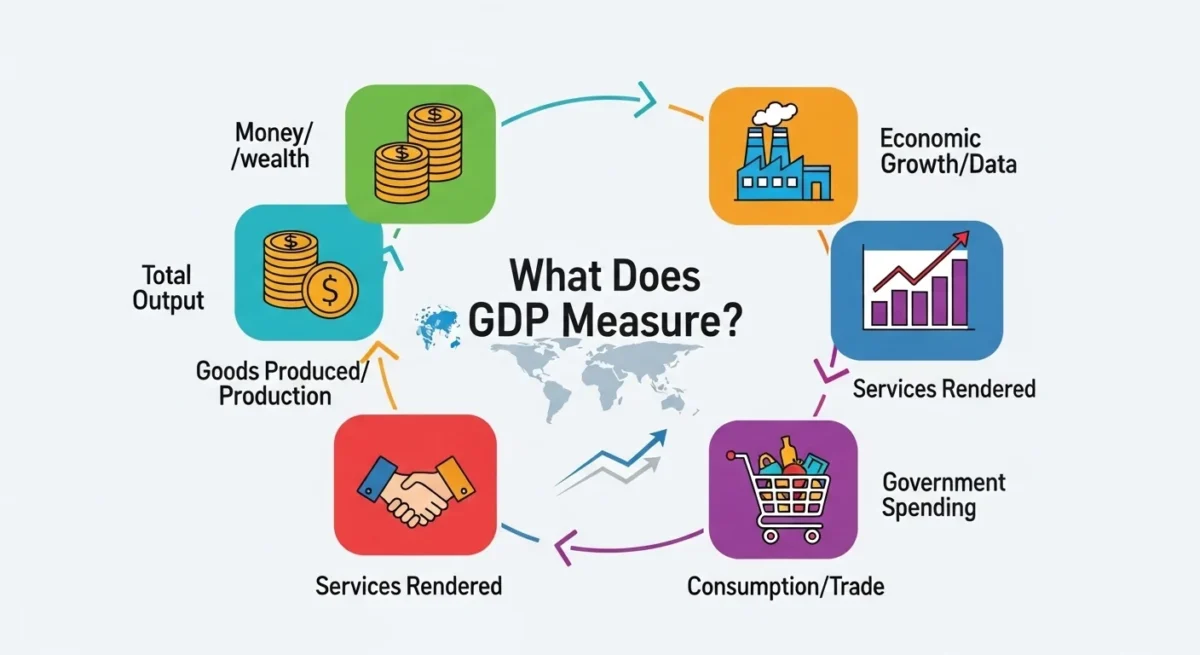
Have you ever scrolled through the news or social media and seen GDP mentioned and thought, “Wait… what does that even mean?” 🤯 I remember the first time I saw a headline saying, “The GDP grew by 3% this quarter,” and I nodded along pretending to understand. If you’ve been there, you’re not alone!
Quick Answer:
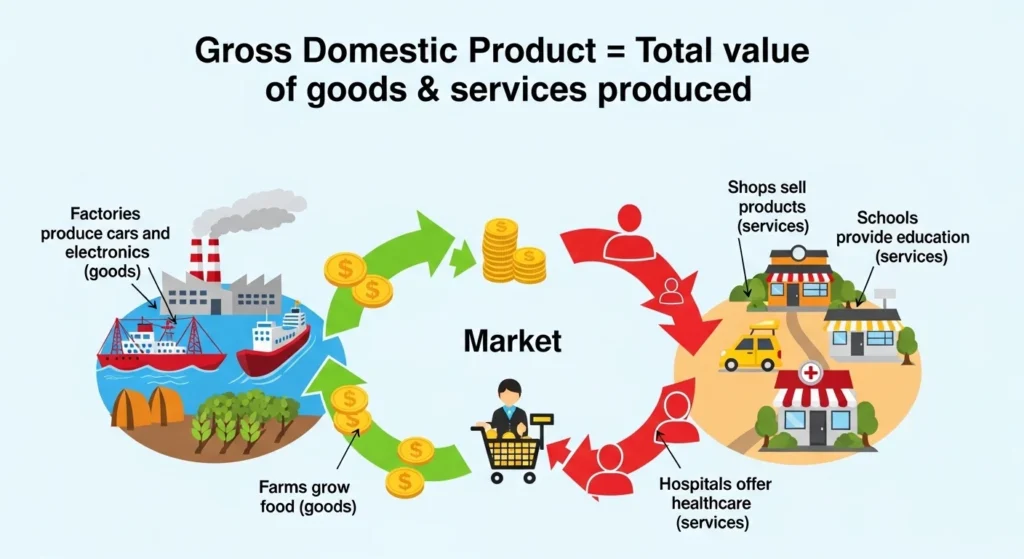
GDP stands for Gross Domestic Product. It’s a formal economic term that measures the total value of goods and services produced in a country over a specific period.
In simpler terms, it’s like your country’s yearly “shopping bill” 🛒 the total stuff it makes and sells.
What Does GDP Mean in Text and Everyday Conversation? 🧠
Even though GDP in text isn’t slang, people often mention it in finance discussions, news, or social media posts.
- Full Form: Gross Domestic Product
- Meaning in Simple Words: The total value of goods and services produced in a country over a certain time.
- Example Sentence: “The GDP of the UK grew by 1.5% last year, showing a stable economy.”
In short: GDP = Gross Domestic Product = total value of goods & services produced in a country.
Think of it like this: if your country sold everything it produced in a year, GDP is the total amount of money you’d get. Easy, right? 😎
Types of GDP You Should Know 🧩
Understanding GDP fully means knowing there are different types:
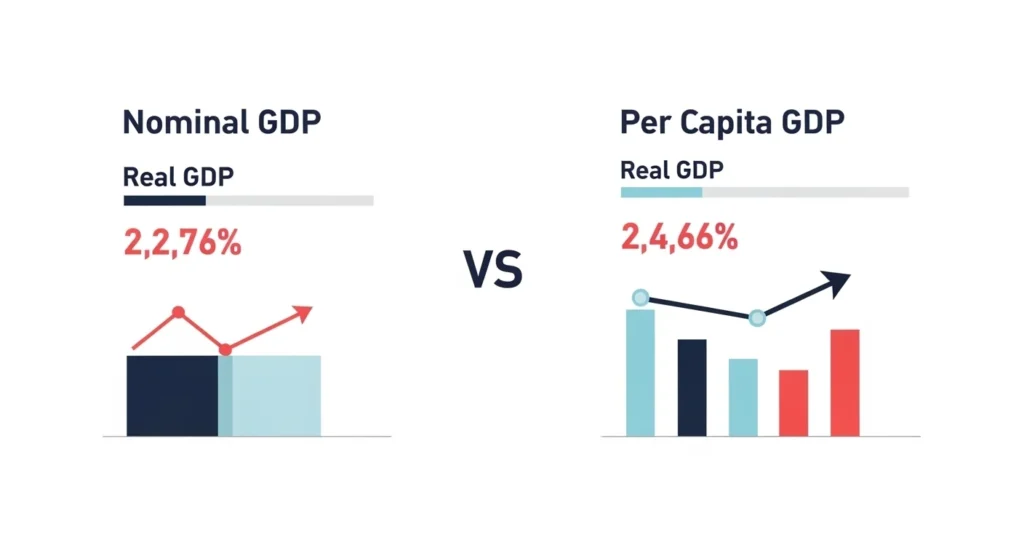
- Nominal GDP: Measures total value using current prices.
- Real GDP: Adjusts for inflation, giving a more accurate picture of growth.
- Per Capita GDP: GDP divided by the population, showing average wealth per person.
Why it matters: These types help economists and governments understand economic health in different ways.
Where Is GDP Commonly Used? 📱
GDP shows up in news, social media, and professional discussions. Here’s where:
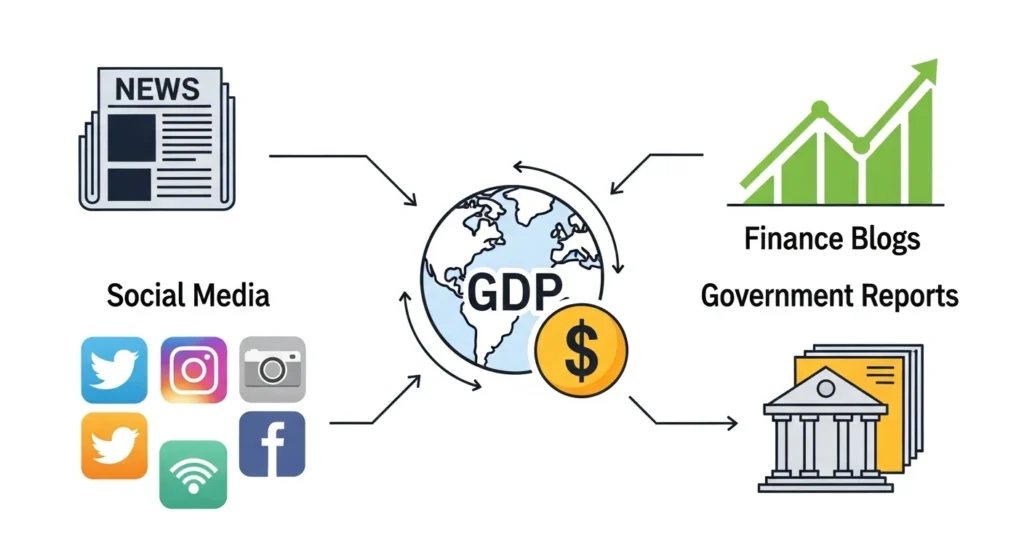
- 📰 News Articles & Websites: Reports on GDP growth or recession
- 📊 Finance Blogs & Reports: Explaining GDP calculation or trends
- 🏛️ Government & Policy Discussions: Comparing GDP vs national income or planning budgets
- 🌐 Social Media / Reddit / LinkedIn: Discussing GDP for beginners or economic updates
Tone: Mostly formal, but occasionally casual in social media posts.
Pro Tip: When chatting casually, you can say, “GDP is like the country’s yearly sales total 🏷️” to make it relatable.
Real Life Examples of GDP in Conversation 💬
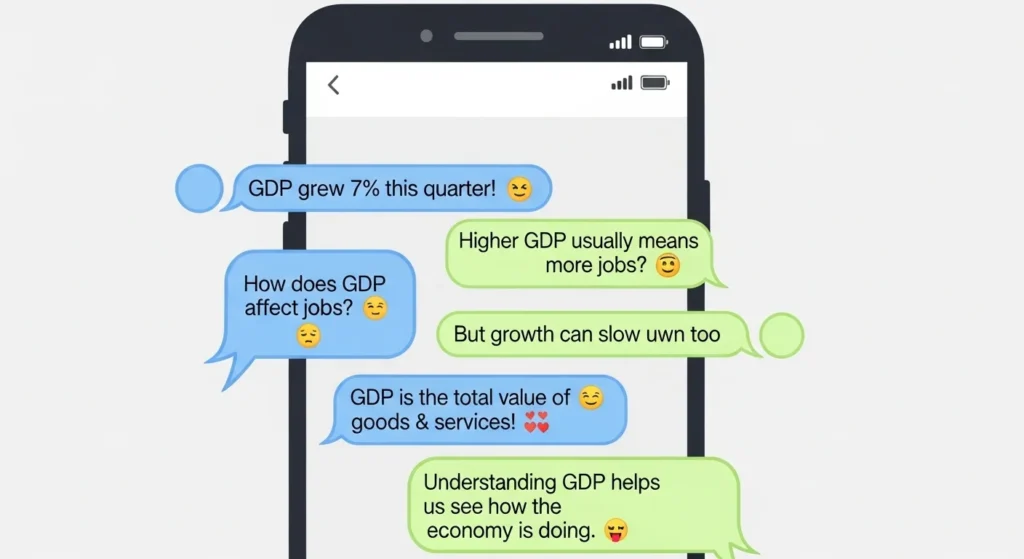
Here are some examples showing how GDP is mentioned in chats or posts:
- Example
A: “Did you see India’s GDP numbers?”
B: “Yeah! GDP growth is 7% this quarter 😲”
- Example
A: “GDP sounds boring, why do we care?”
B: “It affects jobs, salaries, and prices 💸”
- Example
A: “The country’s GDP dropped… should I be worried?”
B: “It could mean slower economic growth, so keep an eye on it 👀”
- Example
A: “GDP growth? What’s that?”
B: “It’s how much the economy produced compared to before 📈”
- Example
A: “Does GDP affect my daily life?”
B: “Yes! From your salary to prices at the grocery store 🥦💰”
When to Use and When Not to Use GDP 🕓
✅ When to Use:
- Discussing GDP meaning or economic performance
- Talking about GDP growth, calculation, or national income
- Writing blogs, reports, or articles on finance or economics
❌ When Not to Use:
- Casual weekend chats 😅
- Flirty or humorous messages 💌
- Informal conversations where economics is irrelevant
Comparison Table:
| Context | Example Phrase | Why It Works |
| Friend Chat | “GDP stuff is confusing lol” | Casual & relatable |
| Work Chat | “We need to analyze GDP trends Q1” | Professional & relevant |
| “Please review the GDP report attached” | Formal & clear |
How GDP Affects Daily Life 🏠
Many beginners wonder, “How does GDP affect me?” Here’s a simple breakdown:
- 💼 Jobs: Higher GDP often means companies are growing and hiring more.
- 💰 Income & Salaries: Economic growth can lead to better pay over time.
- 🛒 Prices & Inflation: GDP affects how much goods and services cost.
- 🏡 Housing & Investment: Strong GDP growth can boost property markets and investments.
Tip: You don’t need to be an economist to see GDP’s impact — just notice changes in jobs, prices, or wages.
Similar Terms and Economic Slang 🔄
| Term | Meaning | When to Use |
| GNP | Gross National Product, includes citizens’ output abroad | Economic discussions |
| Inflation | Prices going up over time | Finance, news, or casual talks |
| Unemployment Rate | % of workforce without jobs | Policy, social media, reports |
| Fiscal Policy | Government spending & tax rules | Professional & educational |
| Recession | Period of economic decline | News, articles, or reports |
FAQs About GDP ❓
Q1: What does GDP measure?
A: GDP measures the total value of goods and services produced in a country over a period of time.
Q2: How is GDP calculated?
A: GDP can be calculated using production, income, or expenditure approaches.
Q3: Does a high GDP mean everyone is rich?
A: No. GDP measures total production, not individual wealth.
Q4: Can GDP shrink?
A: Yes, a declining GDP indicates slower economic growth or recession.
Q5: Why is GDP important for beginners to know?
A: GDP helps understand a country’s economic health, job opportunities, prices, and policy decisions.
Q6: What is the difference between GDP and GNP?
A: GDP counts all production within a country, while GNP counts production by citizens even abroad.
Conclusion ✨
Gross Domestic Product (GDP) is the most important economic indicator that measures a country’s total production of goods and services.
Understanding GDP meaning, GDP full form, GDP calculation, and GDP growth helps you follow news, social media discussions, and professional economic talks.
Think of GDP like your country’s yearly “shopping bill” 🛒 the total stuff it makes and sells. Now when someone mentions GDP, you can confidently say:
“Ah, that’s the country’s total economic output! 😎”

Jackson Madison is a forward-thinking creator with a drive for innovation and meaningful impact. His vision blends creativity, strategy, and authenticity to inspire growth and change.
Leave a Comment