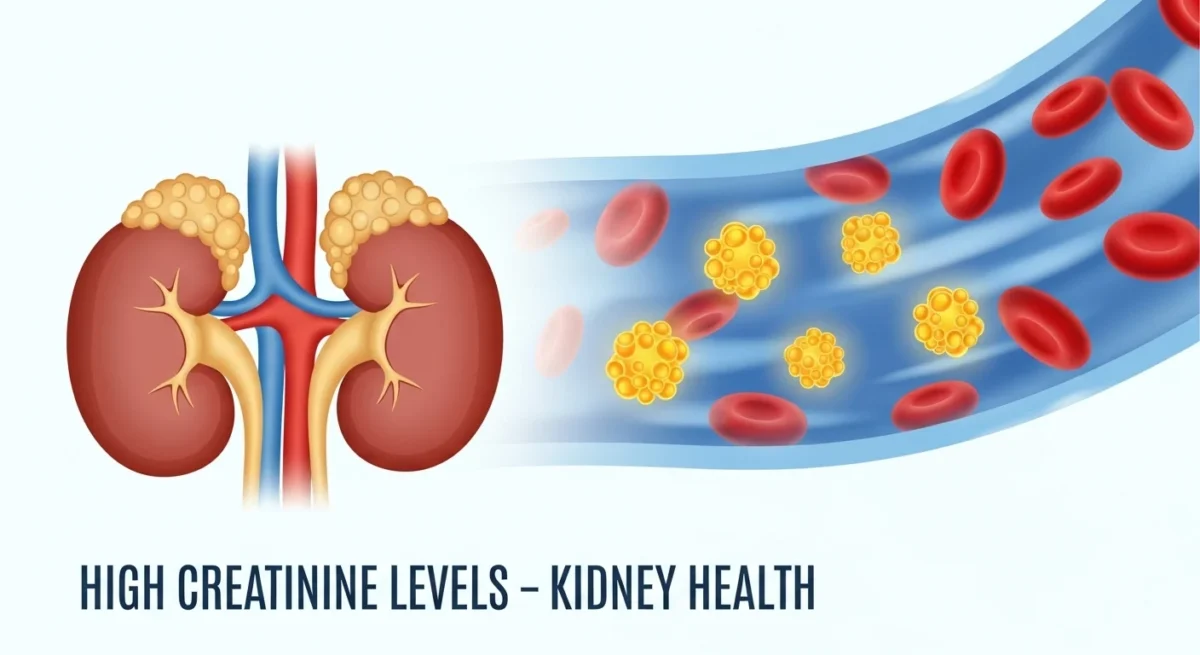
Have you ever looked at your blood test results and noticed the term “high creatinine” and felt a little worried or confused? 😅 I remember seeing it for the first time and thinking, “Is this serious?” Don’t panic! Understanding what high creatinine means is easier than it sounds, and knowing it can help you monitor your kidney health effectively.
Quick Answer:
High creatinine means your creatinine levels in blood are above normal. It usually indicates your kidneys aren’t filtering as efficiently, but mild elevations are often temporary. 🩺
What Does High Creatinine Mean? 🧠
Creatinine is a waste product that your muscles produce naturally. Normally, your kidneys filter it out of your blood and remove it through urine.
When creatinine levels are high, it can indicate that your kidneys are under stress or not working optimally.
Example in a chat:
A: “I just got my lab results 😬”
B: “Everything okay?”
A: “It says high creatinine 😟 Dr says I need to monitor it closely”
In short: High creatinine = elevated creatinine in blood = possible kidney stress or reduced kidney function. ✅
Causes of High Creatinine ⚠️
High creatinine doesn’t always mean kidney disease. Common causes include:
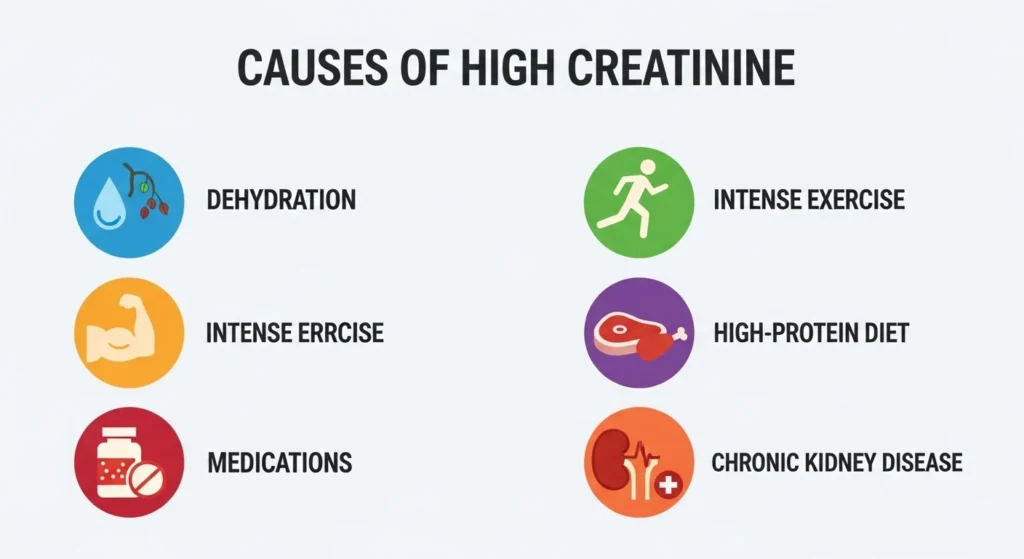
- 💧 Dehydration – not enough water in the body
- 🏋️ Intense exercise – temporary muscle breakdown increases creatinine
- 🍖 High-protein diet – excess protein can raise creatinine levels
- 💊 Certain medications – like some antibiotics or NSAIDs
- 🩺 Chronic kidney disease (CKD) – long-term kidney damage
- ⚡ Other medical conditions – diabetes, high blood pressure, or heart disease
Normal vs High Creatinine Levels 📊
Knowing the normal creatinine range can help you understand your results:
| Age/Gender | Normal Creatinine (mg/dL) |
| Adult male | 0.7 – 1.3 |
| Adult female | 0.6 – 1.1 |
| Children | 0.3 – 0.7 |
Levels above these ranges are considered high creatinine. Your doctor may order additional tests to determine the cause.
Symptoms Associated With High Creatinine ⚡
Some people may not feel symptoms, but possible signs include:
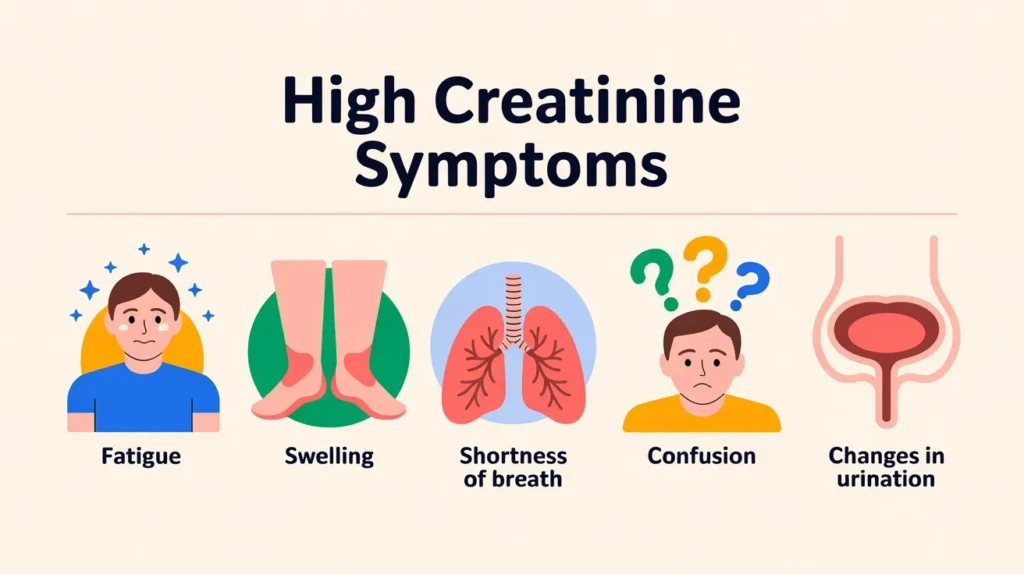
- Fatigue or weakness 😴
- Swelling in legs, ankles, or hands 🦵
- Shortness of breath 😮💨
- Confusion or difficulty concentrating 🤯
- Changes in urination frequency or color 🚽
If you notice these symptoms, consult a doctor immediately.
When to Use and When Not to Use “High Creatinine” 🕓
✅ When to Discuss:
- Talking with a doctor or nurse 🩺
- Sharing lab results with family/friends
- Asking for advice in a medical forum
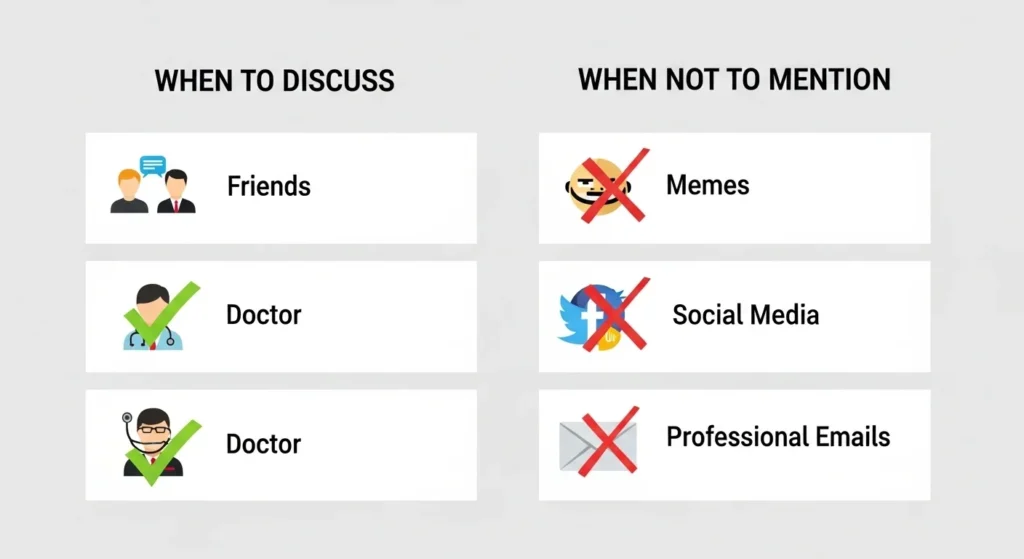
❌ When Not to Mention Casually:
- Memes or jokes 😅
- Flirty or social media posts without context
- Work emails unrelated to health
Comparison Table:
| Context | Example Phrase | Why It Works |
| Friend Chat | “My creatinine levels are high, staying hydrated 💧” | Casual & supportive |
| Health Forum | “I have elevated creatinine. Should I be concerned?” | Informative & safe |
| Doctor Email | “Lab results show high creatinine. Please advise.” | Professional & clear |
| Social Media | “Just got my blood test… high creatinine 😔” | Expressive but casual |
Actionable Steps for High Creatinine ✅
If your creatinine levels are elevated, here’s what you can do:
- 💧 Stay hydrated – drink plenty of water
- 🥗 Watch your diet – reduce excess protein and salt
- 🩺 Follow up with a doctor – discuss your lab results
- 🚫 Avoid nephrotoxic medications – like certain painkillers unless prescribed
- 🏃 Moderate exercise – avoid extreme workouts that may temporarily raise creatinine
- 🔄 Repeat blood tests – monitor if levels go down or stay high
Similar Medical Terms or Alternatives 🔄
| Term | Meaning | When to Use |
| Elevated BUN | High blood urea nitrogen | Health chat or lab discussion |
| Kidney stress | Early sign that kidneys are strained | Informal discussions |
| Renal function issue | Problem with kidney filtration | Doctor or medical notes |
| Creatinine clearance | How well kidneys filter creatinine | Lab or doctor discussions |
| Blood urea | Waste measured alongside creatinine | Lab results discussion |
FAQs About High Creatinine ❓
Q1: Can high creatinine be temporary?
A: Yes! Causes like dehydration, diet, or exercise can temporarily raise creatinine. Persistent elevation needs medical evaluation.
Q2: Does high creatinine mean kidney disease?
A: Not always. It may indicate kidney stress, but doctors check additional markers like BUN, eGFR, and urinalysis.
Q3: How can I lower creatinine naturally?
A: Hydration, balanced diet, moderating protein intake, and avoiding harmful medications can help. Always follow your doctor’s advice.
Q4: Should I worry if I have no symptoms?
A: Even without symptoms, persistently high creatinine should be monitored. Early detection helps protect kidney health.
Q5: Can I discuss high creatinine casually with friends?
A: Yes, if the context is supportive. Avoid casual jokes in social media posts without medical context.
Conclusion 🏁
Understanding high creatinine is key to monitoring kidney function and interpreting blood test results.
While mild elevations can be temporary, persistent high creatinine should be evaluated by a doctor.
High creatinine = elevated creatinine in blood = possible kidney stress. 🩺
💡 Key Takeaways:
- Stay hydrated 💧
- Maintain a balanced diet 🥗
- Monitor lab results 📊
- Consult your doctor 🩺
Being informed about your creatinine levels empowers you to take control of your kidney health and respond appropriately if your labs show elevations.

Jackson Madison is a forward-thinking creator with a drive for innovation and meaningful impact. His vision blends creativity, strategy, and authenticity to inspire growth and change.
Leave a Comment