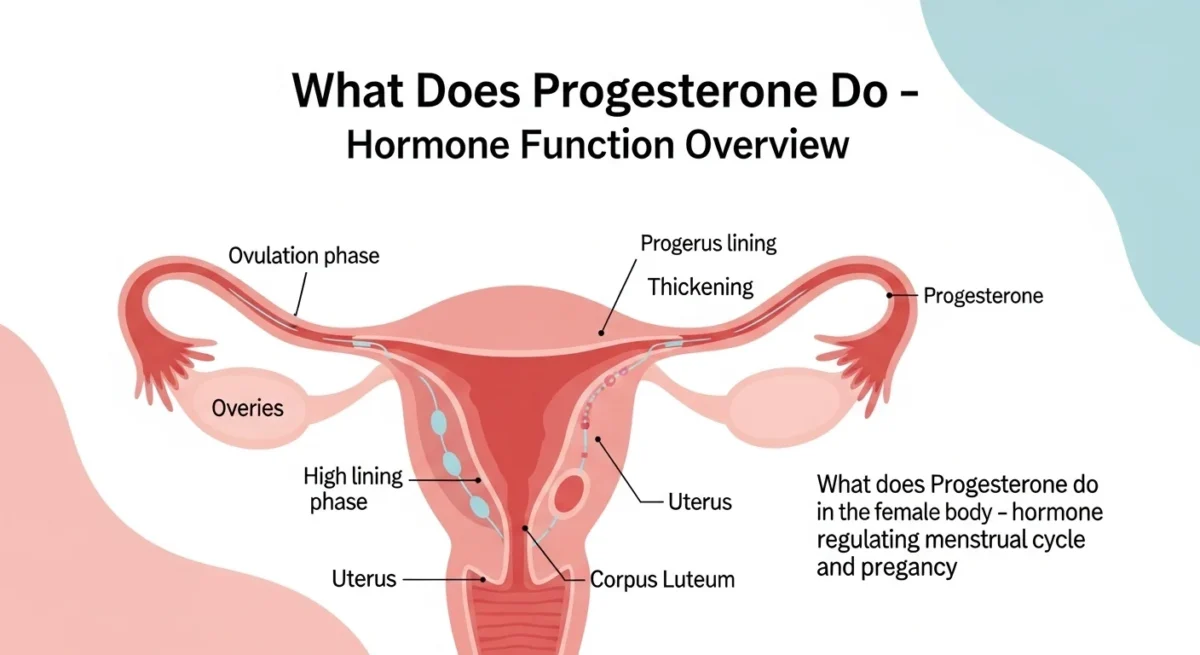
If you’ve ever searched “what does progesterone do”, chances are you were trying to understand your hormones better maybe after a doctor’s visit, fertility research, irregular periods, or pregnancy questions.
Progesterone is often mentioned alongside estrogen, ovulation, and hormone balance, but its exact role can feel confusing.
Here’s the clear answer:
Progesterone is a hormone produced mainly by the ovaries that regulates the menstrual cycle, prepares the uterus for pregnancy, and supports early pregnancy. It also plays a key role in hormone balance within the endocrine system.
What Is Progesterone?
Progesterone is a natural hormone that belongs to the group of steroid hormones. It is produced by:
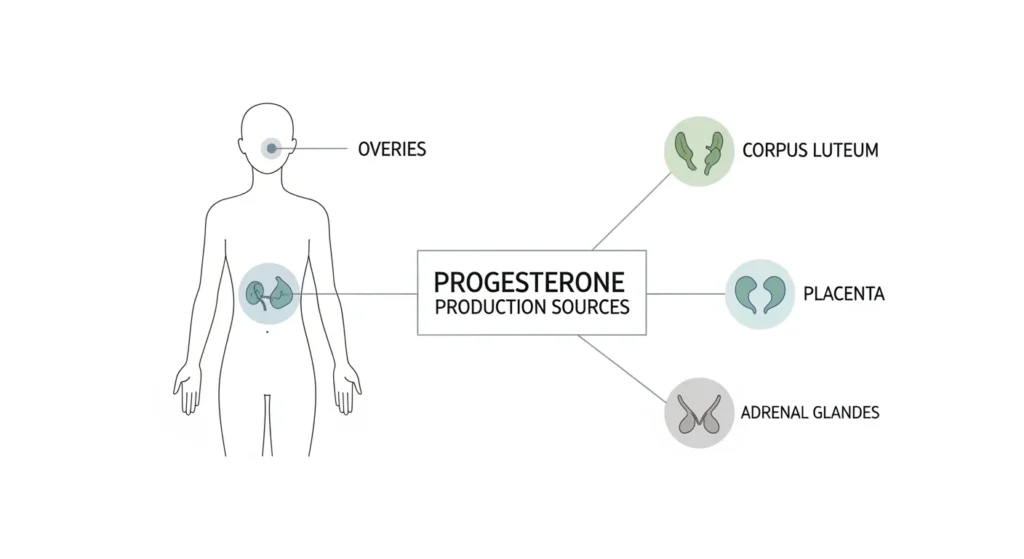
- The corpus luteum (after ovulation)
- The ovaries
- The adrenal glands
- The placenta (during pregnancy)
It works closely with estrogen to regulate reproductive health.
In short:
Progesterone = Reproductive hormone = Controls ovulation, supports pregnancy, balances estrogen.
What Does Progesterone Do in the Female Body?
When people ask what does progesterone do in the female body, they usually want to understand its biological function.
Here are its main roles:
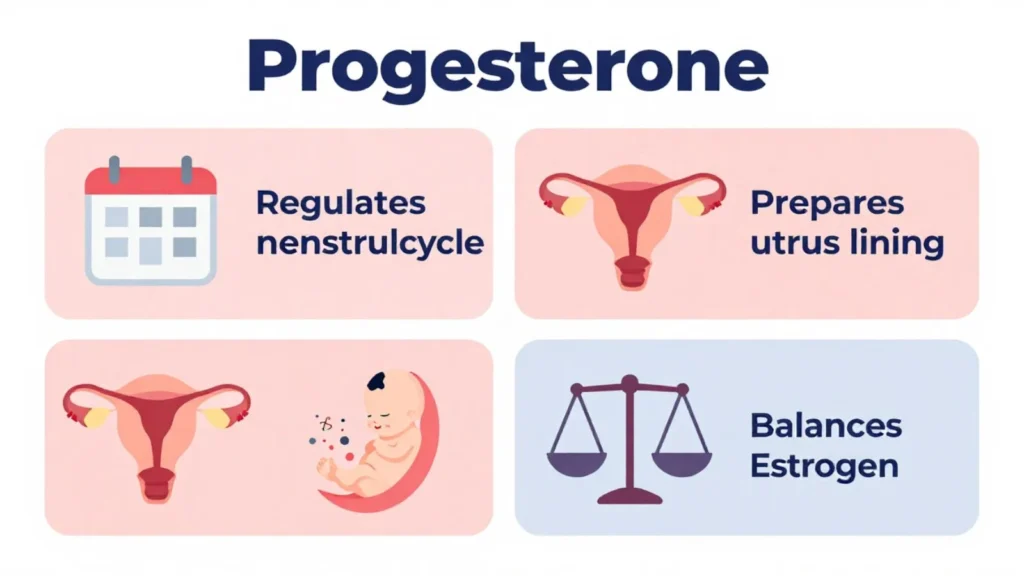
Regulates the Menstrual Cycle
After ovulation, progesterone rises to prepare the uterus lining (endometrium) for possible pregnancy.
If pregnancy doesn’t occur, progesterone levels drop — triggering menstrual bleeding.
This is why progesterone and the menstrual cycle are directly connected.
Prepares the Uterus for Pregnancy
Progesterone thickens and stabilizes the uterus lining so a fertilized egg can implant successfully.
Without adequate progesterone, implantation may not occur properly.
Supports Early Pregnancy
One of the most searched questions is:
What Does Progesterone Do During Pregnancy?
During early pregnancy, progesterone:
- Maintains the uterine lining
- Reduces uterine contractions
- Supports embryo implantation
- Helps prevent early miscarriage
- Modulates immune response to protect the embryo
Doctors often monitor progesterone in early pregnancy, especially during IVF or fertility treatments.
Supports Fertility
Progesterone plays a major role in:
- Ovulation regulation
- Fertility support
- Hormonal balance
Low progesterone levels can interfere with ovulation and make conception more difficult.
Balances Estrogen
Progesterone works alongside estrogen to maintain hormonal equilibrium.
Too much estrogen without enough progesterone can contribute to:
- Hormonal imbalance
- Irregular periods
- Mood changes
- Heavy bleeding
This balance is essential for reproductive health.
What Does Progesterone Do Before a Period?
After ovulation, progesterone rises.
If pregnancy does not occur, progesterone drops sharply which causes the uterus lining to shed (your period).
Low progesterone symptoms before a period may include:
- Mood swings
- Breast tenderness
- Fatigue
- Spotting
- Irregular cycles
This explains why hormonal fluctuations affect PMS symptoms.
What Happens If Progesterone Is Low?
Another common query is: what happens if progesterone is low?
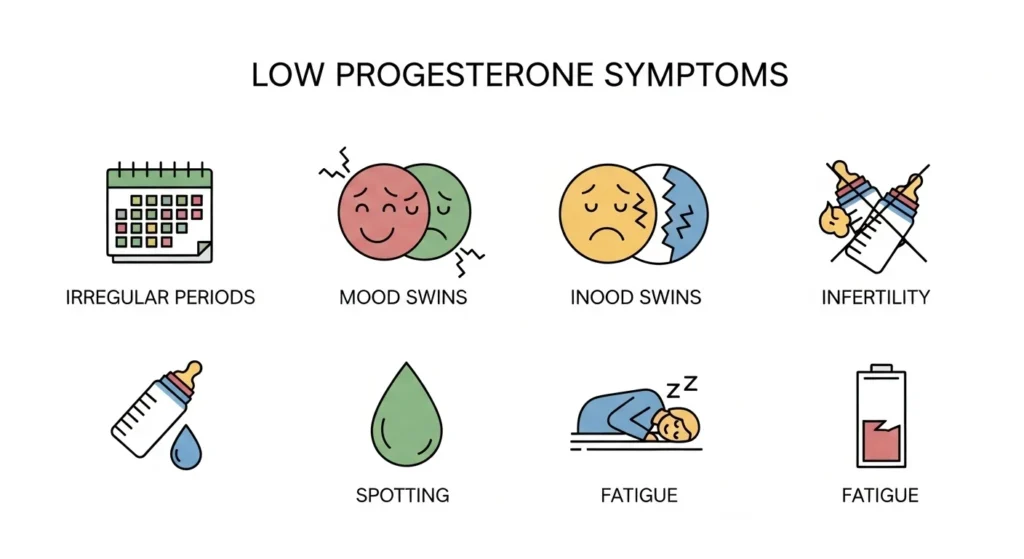
Low progesterone symptoms may include:
- Irregular or missed periods
- Difficulty getting pregnant
- Spotting between cycles
- Mood instability
- Short luteal phase
- Increased miscarriage risk
Doctors diagnose low progesterone through a blood test, typically done after ovulation.
Normal Progesterone Levels
Progesterone levels vary depending on:
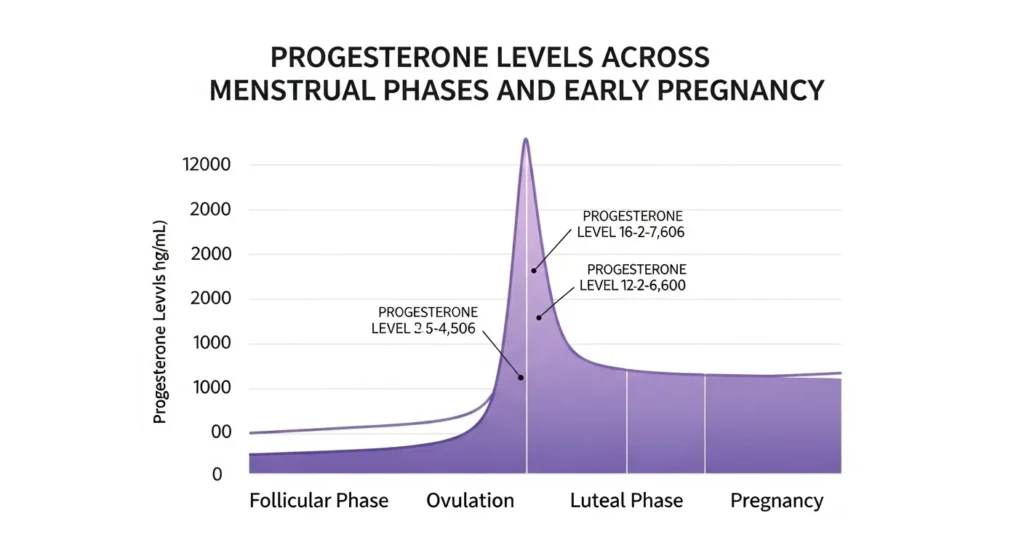
- Menstrual phase
- Pregnancy status
- Age
Typical ranges (approximate):
- Follicular phase: Low
- After ovulation: Moderate rise
- Early pregnancy: Higher and steadily increasing
A healthcare provider interprets results based on timing within the cycle.
What Does Progesterone Do in Men?
Although progesterone is primarily associated with women, men also produce small amounts.
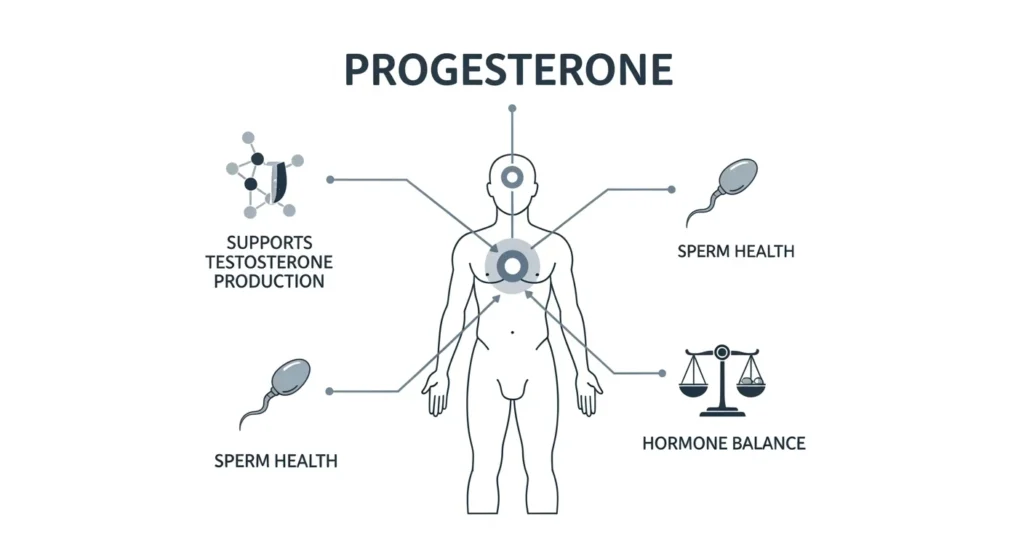
In men, progesterone helps:
- Support testosterone production
- Maintain sperm development
- Balance estrogen levels
It contributes to overall endocrine system function.
Progesterone During Menopause
During menopause, progesterone production declines significantly due to reduced ovulation.
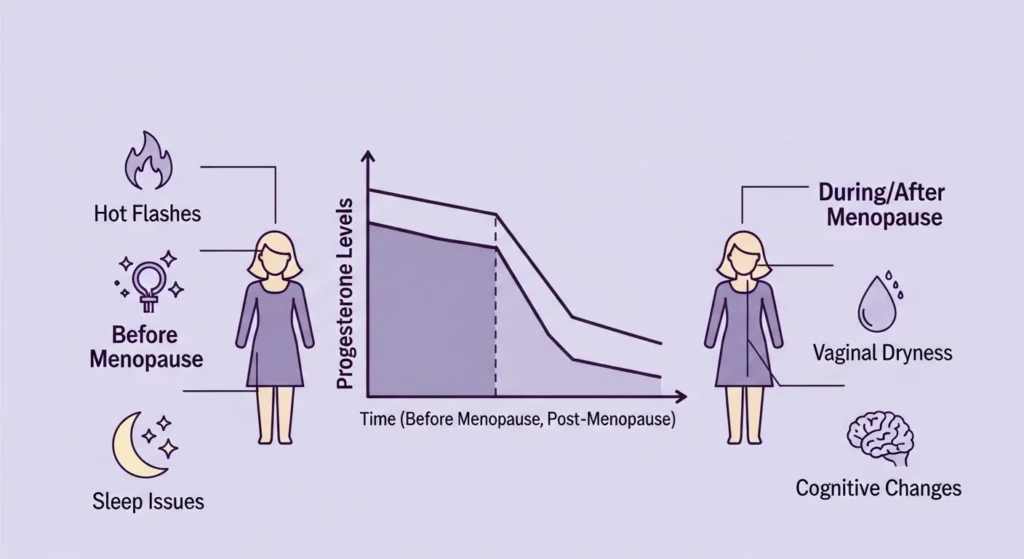
This can contribute to:
- Hot flashes
- Sleep disturbances
- Mood changes
- Hormonal imbalance
Some women discuss progesterone therapy with healthcare providers to manage symptoms.
Progesterone Supplements and Treatment
In certain cases, doctors may prescribe progesterone for:
- Fertility treatments
- IVF support
- Recurrent miscarriage prevention
- Hormone therapy during menopause
- Irregular menstrual cycles
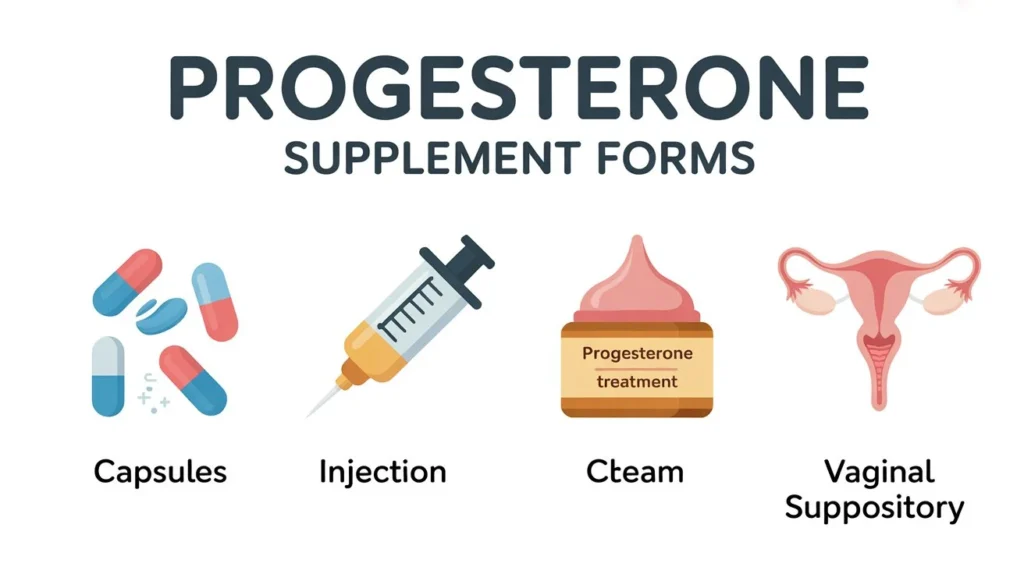
Forms may include:
- Oral capsules
- Vaginal suppositories
- Injections
- Creams
Treatment decisions should always be guided by a medical professional.
Progesterone vs Estrogen: What’s the Difference?
| Hormone | Main Role | When It Dominates |
| Estrogen | Builds uterine lining | First half of cycle |
| Progesterone | Stabilizes and maintains lining | After ovulation |
Both are essential for menstrual regulation and reproductive health.
FAQs About What Does Progesterone Do
What does progesterone do in early pregnancy?
It maintains the uterine lining, prevents contractions, and supports embryo development.
How does progesterone affect mood?
Fluctuations in progesterone can influence brain receptors, affecting mood stability.
Can low progesterone cause infertility?
Yes. Inadequate progesterone may interfere with implantation and ovulation.
Is progesterone only important for women?
No. Men also produce small amounts for hormonal balance.
How is progesterone tested?
Through a blood test, usually about 7 days after ovulation.
Conclusion: What Does Progesterone Do?
So, what does progesterone do?
It is a vital reproductive hormone responsible for:
- Regulating the menstrual cycle
- Supporting ovulation
- Preparing and maintaining the uterus for pregnancy
- Maintaining hormonal balance
- Supporting fertility and early pregnancy
Understanding progesterone function helps explain everything from PMS symptoms to pregnancy support and hormone health.
If you suspect hormonal imbalance or low progesterone symptoms, consult a qualified healthcare provider for proper testing and guidance.

Andrew Michael is a visionary thinker and passionate creator, focused on turning bold ideas into real-world impact. His creativity and dedication inspire others to grow, achieve, and make a difference.
Leave a Comment