The first time I heard someone say, “They might get hit with a RICO charge,” I paused. Was it slang? A crime term? Something from a TV show? If you’ve searched “what does RICO stand for”, you’re likely seeing it mentioned in news headlines, court cases, or even viral TikTok comments and wondering what it actually means.
Let’s clear it up in simple terms.
Quick Answer:
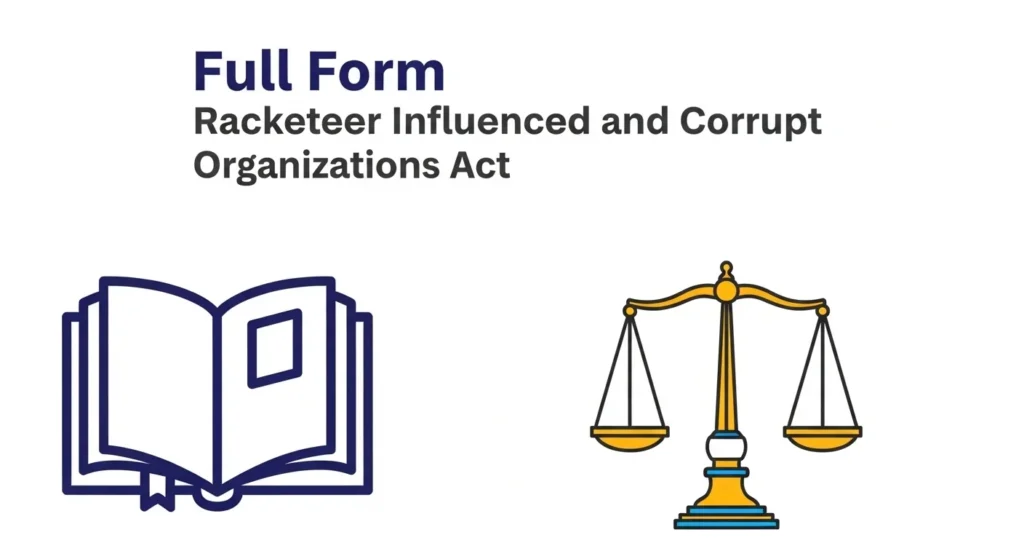
RICO stands for “Racketeer Influenced and Corrupt Organizations Act.” It is a 1970 U.S. federal law created to combat organized crime and ongoing criminal enterprises.
While it’s a serious legal term, it’s sometimes used casually online to exaggerate shady behavior.
🧠 What Does RICO Mean in Text and Law?
📌 Official Legal Meaning
RICO stands for the Racketeer Influenced and Corrupt Organizations Act, a federal law passed by the United States Congress in 1970. It was designed to target organized crime groups, especially mafia-style criminal networks.
Under the law, prosecutors can charge individuals or groups involved in:
- Fraud
- Bribery
- Extortion
- Money laundering
- Drug trafficking
- Ongoing criminal conspiracies
Unlike regular criminal charges, the RICO Act allows authorities to prosecute leaders of criminal organizations even if they didn’t directly commit every crime.
In short:
RICO = Racketeer Influenced and Corrupt Organizations Act = a federal law used to prosecute organized crime networks.
⚖️ What Are RICO Charges?
If you’ve seen the phrase “RICO charges” in the news, it refers to criminal charges filed under the RICO Act.
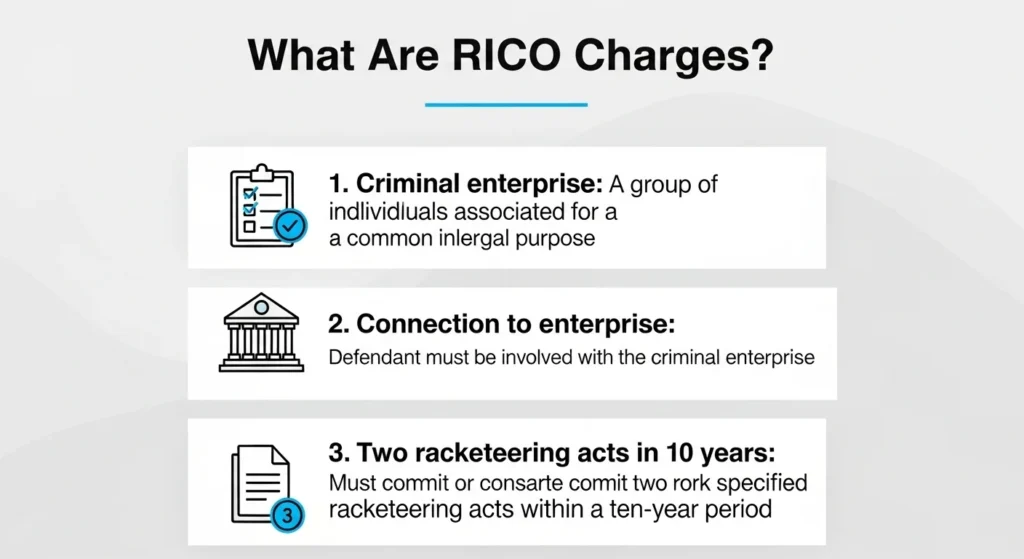
To bring a RICO case, prosecutors must prove:
- A criminal enterprise existed.
- The defendant was connected to it.
- At least two racketeering acts occurred within 10 years.
This makes RICO powerful because it allows courts to treat an entire criminal operation as one coordinated effort instead of separate isolated crimes.
That’s why RICO cases often appear in:
- Organized crime investigations
- Large fraud schemes
- Public corruption cases
- Gang-related prosecutions
🏛 Why Was the RICO Act Created?
The law was passed in 1970 primarily to dismantle mafia organizations operating across the United States. Before RICO, it was difficult to prosecute crime bosses who ordered crimes but didn’t directly commit them.
The RICO Act changed that by allowing prosecutors to:
- Charge leaders for crimes committed by their organization
- Seize assets gained through criminal activity
- Pursue long-term criminal enterprises
Over time, its use expanded beyond mafia cases to include corporate fraud, political corruption, and large-scale financial crimes.
📱 What Does RICO Mean in Text or Social Media?
Now here’s where confusion happens.
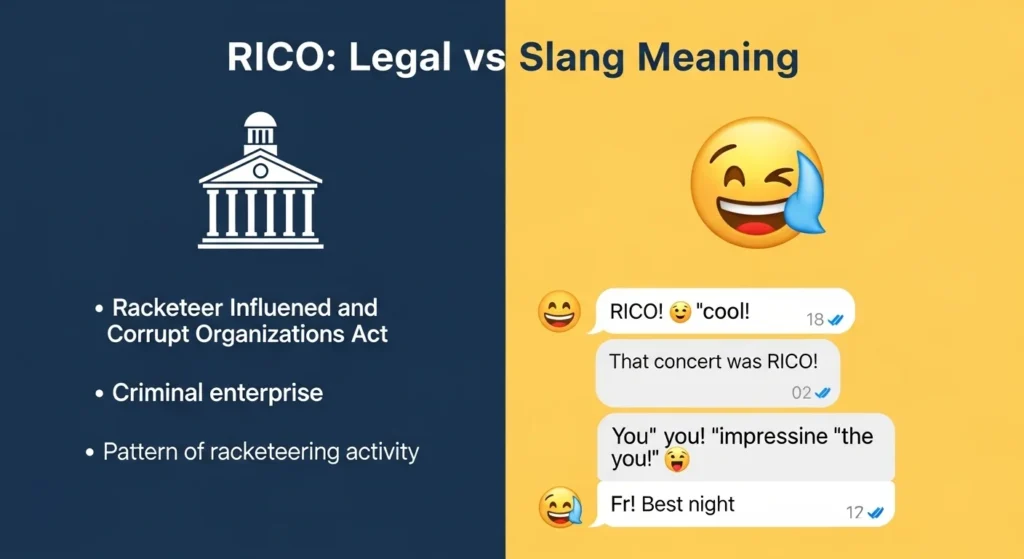
In texting and social media, people sometimes use “RICO” jokingly to exaggerate small, sneaky, or “criminal” behavior among friends.
For example:
“Bro ate my leftovers again? That’s a RICO case 😂”
In this context, it doesn’t change its official meaning — but it’s used humorously to suggest someone’s actions are “criminal-level” dramatic.
Tone: Casual, sarcastic, meme-based.
💬 Examples of RICO in Conversation
Here’s how it appears in real chats:
Example 1
A: “He switched the rules mid-game.”
B: “That’s RICO behavior 😭”
Example 2
A: “She exposed our secret in the group chat.”
B: “Immediate RICO charges.”
Example 3
A: “They split the bill unevenly.”
B: “Whole organized crime operation 😂”
Example 4
A: “He keeps using my Netflix without asking.”
B: “Federal RICO incoming.”
These are exaggerations — not real legal accusations.
🕓 When to Use and When Not to Use RICO
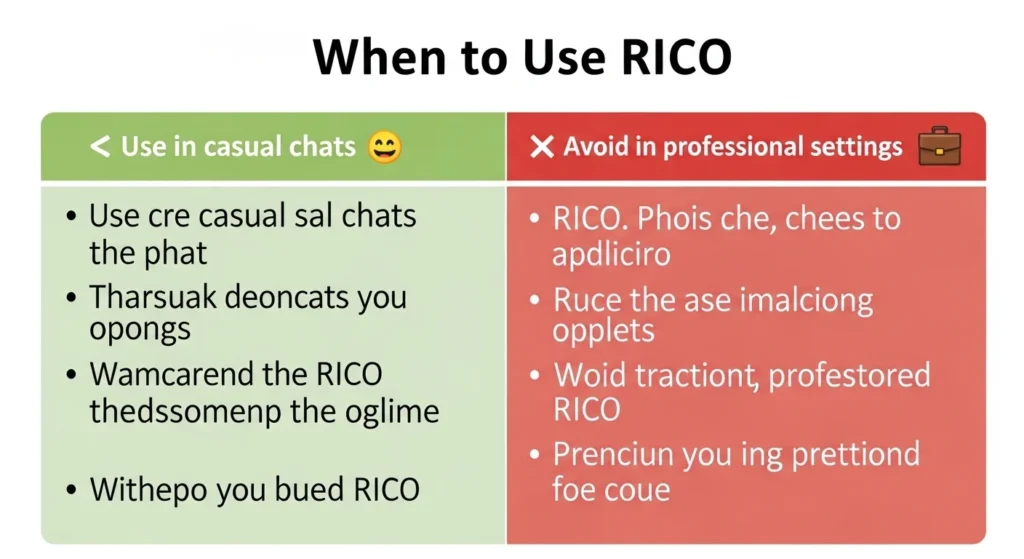
✅ When to Use (Slang Context)
- Casual chats with friends
- Meme comments
- Gaming banter
- Social media exaggeration
❌ When NOT to Use
- Professional emails
- Legal discussions
- Court-related conversations
- Serious accusations
| Context | Example Phrase | Why It Works |
| Friend Chat | “That’s RICO energy 😂” | Funny exaggeration |
| Work Chat | “Please clarify this issue.” | Professional tone |
| “Kindly review the document.” | Formal & appropriate |
🔄 Similar Slang Words
If you’re using RICO jokingly, similar slang includes:
| Slang | Meaning | When to Use |
| Sus | Suspicious behavior | Gaming & texting |
| Shady | Sneaky or dishonest | Casual conversation |
| Sketchy | Questionable actions | Informal chats |
| Scam | Deceptive behavior | Joking tone |
❓ FAQs About RICO
What does RICO stand for?
RICO stands for Racketeer Influenced and Corrupt Organizations Act, a 1970 U.S. federal law targeting organized crime.
What is racketeering?
Racketeering refers to illegal business activities carried out as part of an organized criminal enterprise.
Is RICO only for mafia cases?
No. While originally aimed at mafia groups, RICO is now used in cases involving fraud, corruption, gangs, and financial crimes.
Is RICO a slang word?
No. It is a legal term. However, it is sometimes used humorously online.
Can individuals be charged under RICO?
Yes. Individuals connected to an organized criminal enterprise can face RICO charges.
✅ Conclusion: What Does RICO Stand For?
To summarize clearly:
- RICO full form: Racketeer Influenced and Corrupt Organizations Act
- Passed: 1970
- Purpose: Combat organized crime and ongoing criminal enterprises
- Modern use: Serious legal term, sometimes joked about online
If you searched “what does RICO stand for,” now you have both the official legal meaning and the social media context.
At its core:
RICO = Racketeer Influenced and Corrupt Organizations Act = a powerful federal law used to prosecute organized crime.
And occasionally… a dramatic way to joke about your friend stealing fries. 😄

Jackson Madison is a forward-thinking creator with a drive for innovation and meaningful impact. His vision blends creativity, strategy, and authenticity to inspire growth and change.
Leave a Comment