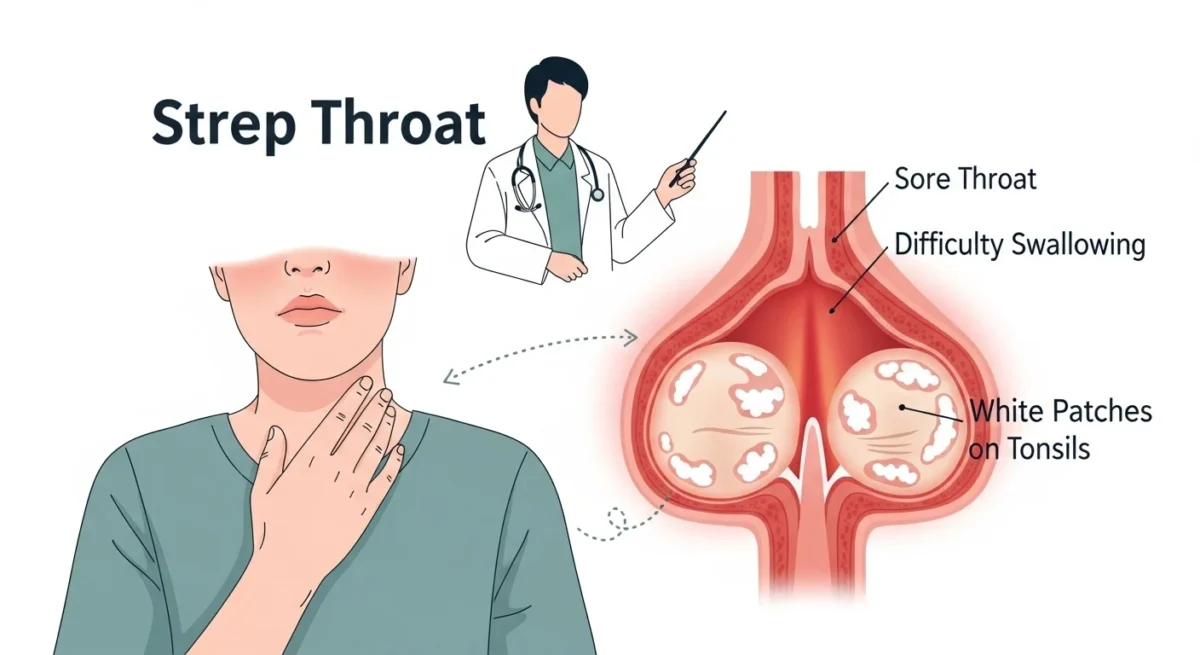
You wake up in the morning with a sore throat that feels much worse than usual. Swallowing even a sip of water hurts, your throat feels raw, and your body feels tired. At first, you might think it’s just a cold.
But then the pain gets sharper, and you start wondering: what does strep throat feel like, and how is it different from a normal sore throat?
Many people search this question when their throat pain suddenly becomes severe. Understanding the early signs of strep throat can help you recognize the infection and seek treatment quickly.
Quick Answer:
Strep throat is a bacterial throat infection caused by Group A Streptococcus bacteria. It usually feels like a sudden, severe sore throat with pain when swallowing, fever, swollen glands, and sometimes white patches on the tonsils.
🧠 What Does Strep Throat Feel Like?
If you’re wondering how does strep throat feel, most people describe it as a sharp and painful sore throat that appears suddenly.
Unlike a mild sore throat from a cold, strep throat symptoms often become intense within a short time.
Common sensations include:
- Severe throat pain
- Strep throat pain when swallowing food or water
- A burning or scratchy feeling in the throat
- Difficulty swallowing saliva
- Swollen tonsils
- Red throat and white patches
- White spots on throat strep infection
- Swollen lymph nodes in the neck
- Fever with sore throat
Many people say the pain feels like sharp irritation or a “razor-blade” sensation when swallowing.
In adults, strep throat symptoms in adults may also include:
- headache
- fatigue
- body aches
- loss of appetite
For children, strep throat symptoms in children may include:
- stomach pain
- nausea or vomiting
- irritability
In short:
Strep throat = bacterial throat infection = sudden severe throat pain, fever, and difficulty swallowing.
🔍 Early Signs of Strep Throat
Recognizing the early signs of strep throat can help you get treatment faster.
The infection often starts quickly and may include:
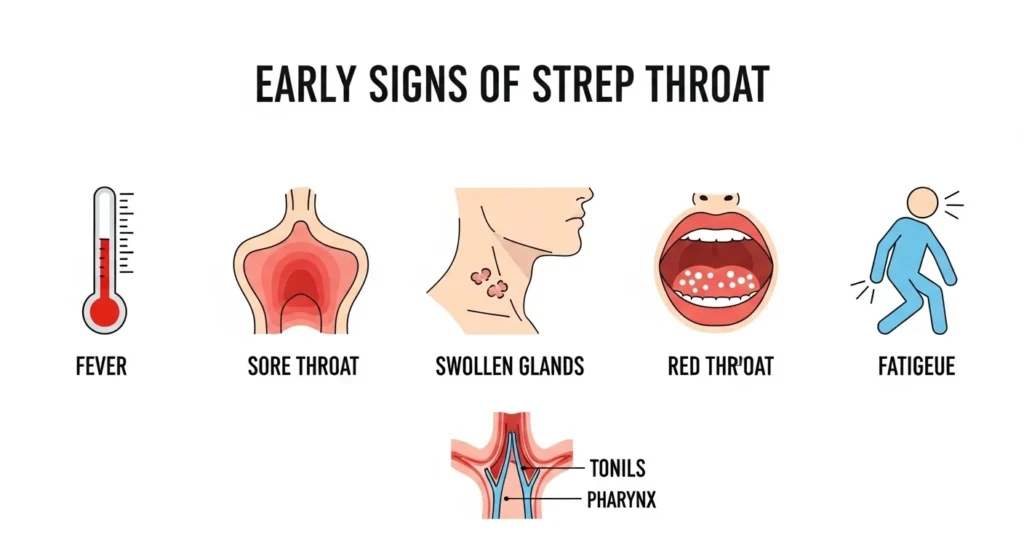
- sudden sore throat
- fever above 101°F (38.3°C)
- painful swallowing
- swollen glands in the neck
- red and inflamed throat
Some people also notice small red spots on the roof of the mouth, which can be a common sign of strep throat infection symptoms.
Unlike a cold, strep throat usually does not cause coughing or a runny nose.
🆚 Strep Throat vs. Regular Sore Throat
Many people confuse strep throat with a normal sore throat caused by a cold or flu.
Here’s how they differ:
| Symptom | Strep Throat | Viral Sore Throat |
| Cause | Group A Streptococcus bacteria | Viruses |
| Onset | Sudden | Gradual |
| Fever | Common | Sometimes |
| Cough | Rare | Common |
| White patches | Often present | Rare |
| Treatment | Antibiotics often required | Usually resolves on its own |
Understanding the difference between sore throat and strep throat helps people decide when to seek medical care.
👀 What Does Strep Throat Look Like?
Besides how it feels, many people ask what strep throat looks like.
Typical signs include:
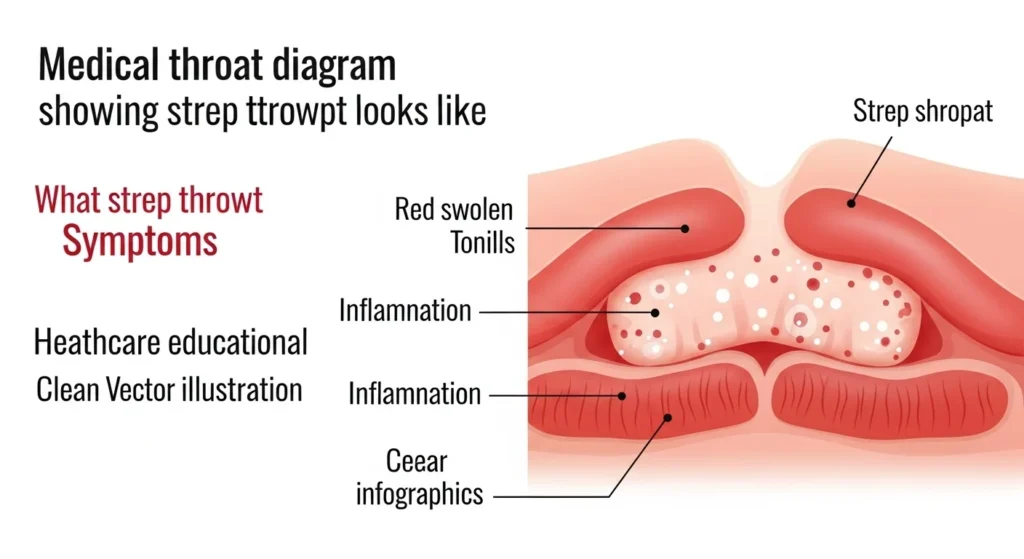
- Red, swollen tonsils
- White spots or streaks of pus
- Swollen lymph nodes in the neck
- Tiny red spots on the roof of the mouth
These visual symptoms often appear alongside strep throat throat pain and fever.
Doctors usually confirm the infection using a strep throat test.
🩺 How to Tell If You Have Strep Throat
If you’re unsure how to tell if you have strep throat, doctors usually look for a combination of symptoms.
Common indicators include:
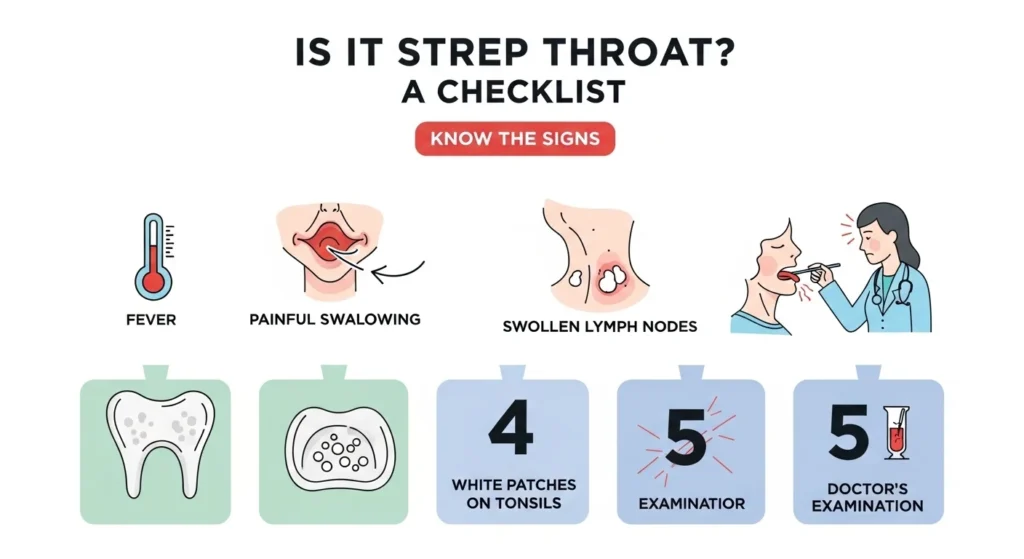
- severe sore throat without cough
- fever
- swollen lymph nodes
- white patches on the tonsils
- difficulty swallowing
A healthcare provider may perform a rapid strep test or throat culture to confirm a strep throat diagnosis.
⏳ How Long Does Strep Throat Last?
Without treatment, strep throat infection symptoms can last 3 to 7 days or longer.
With proper strep throat treatment, most people start feeling better within 24–48 hours after starting antibiotics.
Recovery times can vary depending on:
- overall health
- age
- how quickly treatment begins
Doctors usually recommend rest, hydration, and medication to help relieve symptoms.
💊 Strep Throat Treatment
Because strep throat is caused by bacteria, doctors often prescribe antibiotics for strep throat treatment.
Treatment usually includes:
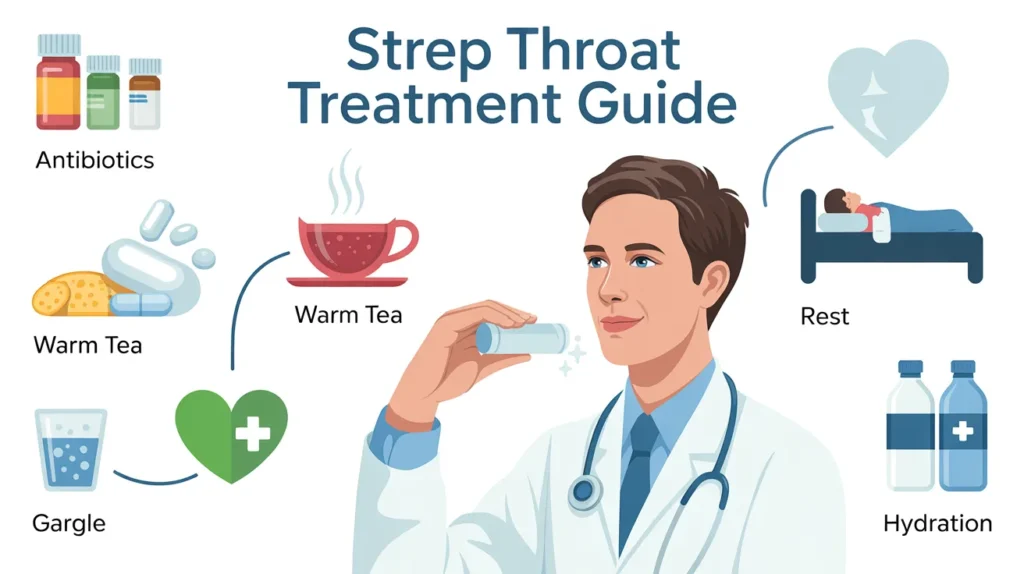
- Antibiotics to kill the bacteria
- Pain relievers to reduce fever and throat pain
- Warm liquids or soup to soothe the throat
- Saltwater gargles to reduce irritation
Most people recover quickly once strep throat treatment begins.
⚠️ Is Strep Throat Contagious?
Yes, strep throat is contagious.
The bacteria spread through respiratory droplets, such as:
- coughing
- sneezing
- sharing utensils or drinks
- close contact with infected people
People with strep throat can spread the infection until they have taken antibiotics for about 24 hours.
🚨 When to See a Doctor
You should seek medical care if you experience:
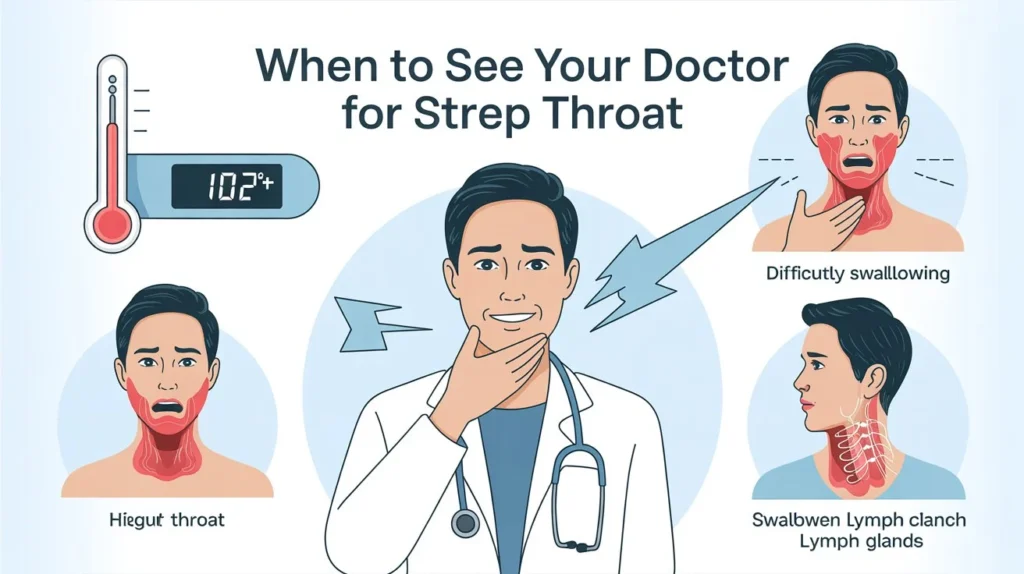
- severe throat pain
- fever above 101°F
- difficulty swallowing or breathing
- swollen neck glands
- white spots on the throat
A doctor can confirm the infection and recommend the right strep throat diagnosis and treatment.
Early treatment helps prevent complications and speeds recovery.
❓ FAQs About Strep Throat
1. What does strep throat feel like when swallowing?
Many people describe strep throat pain when swallowing as sharp or burning. It can feel very uncomfortable even when swallowing saliva.
2. How bad does strep throat hurt?
The pain can be quite severe. Many patients say it feels much worse than a normal sore throat, especially during the first few days.
3. What causes strep throat?
Strep throat is caused by Group A Streptococcus bacteria, which infect the throat and tonsils.
4. Can adults get strep throat?
Yes. Although it’s more common in children, strep throat symptoms in adults can still occur and may cause significant throat pain and fever.
5. Is strep throat serious?
Most cases are mild and treatable, but untreated infections can sometimes lead to complications. That’s why early diagnosis and treatment are important.
🧾 Conclusion
If you’ve been wondering what does strep throat feel like, the most common description is a sudden and severe sore throat that makes swallowing painful.
Unlike mild throat infections, strep throat symptoms often include fever, swollen tonsils, and white patches in the throat.
Because this condition is caused by Group A Streptococcus bacteria, proper strep throat diagnosis and treatment are important for quick recovery.
Recognizing the early signs of strep throat can help you seek medical care sooner and prevent the infection from spreading.
If your sore throat becomes severe or is accompanied by fever and swollen glands, it’s best to consult a doctor and get tested. With the right care and strep throat treatment, most people feel better within a couple of days.

Andrew Michael is a visionary thinker and passionate creator, focused on turning bold ideas into real-world impact. His creativity and dedication inspire others to grow, achieve, and make a difference.
Leave a Comment