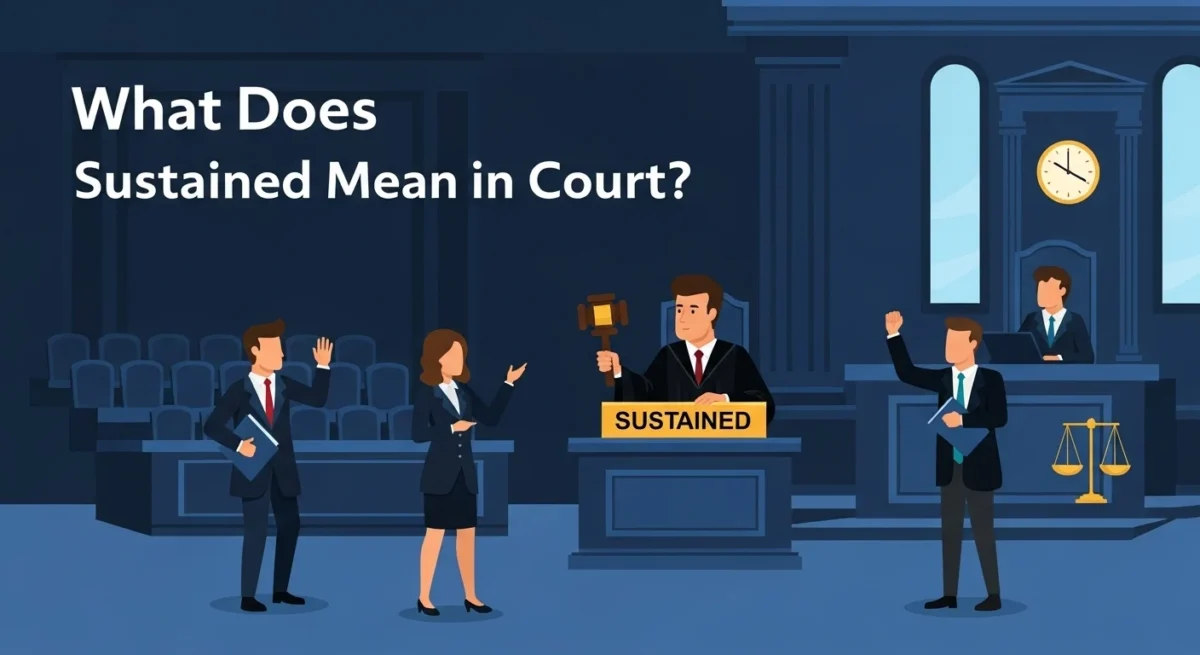
Imagine watching a courtroom scene in a movie or TV show. A lawyer suddenly stands up and says, “Objection!” The judge pauses for a moment and replies, “Sustained.” If you’ve ever heard that line, you might have wondered: what does sustained mean in court, and why is it so important?
This term is one of the most common pieces of courtroom terminology used during trials.
Understanding it can help you follow real legal cases, court transcripts, and legal discussions much more easily.
Quick Answer:
In court, “sustained” means the judge agrees with a lawyer’s objection and stops the question, statement, or evidence from continuing. It confirms that the legal objection is valid under courtroom rules.
🧠 What Does Sustained Mean in Court?
To fully understand what does sustained mean in court, you need to know how objections work during a trial.
In legal proceedings, lawyers may raise an objection in court when they believe a question, testimony, or piece of evidence violates legal rules. The judge then decides whether the objection is valid.
If the judge agrees with the objection, they say “sustained.”
This means the question or statement must stop, and the lawyer may need to ask a different question.
Example:
Lawyer: “What did someone else tell you about the incident?”
Opposing Lawyer: “Objection! Hearsay.”
Judge: “Sustained.”
Because the judge sustained the objection, the witness cannot answer the question.
In short:
Sustained = Judge agrees with objection = The objection is valid.
⚖️ What Happens When an Objection Is Sustained?
Many people ask what happens when an objection is sustained during a trial.
When the judge rules sustained, several things may occur:
- The lawyer must stop asking the question
- The witness cannot answer the question
- The lawyer may rephrase the question
- The judge may instruct the jury to ignore the statement
This process helps maintain fairness in court trial procedures and ensures the trial follows the rules of evidence.
For example:
Lawyer: “Did your friend tell you the defendant was guilty?”
Opposing Lawyer: “Objection! Hearsay.”
Judge: “Sustained.”
In this situation, the witness is not allowed to answer because hearsay evidence is restricted in court.
📚 Common Reasons Objections Are Sustained
Judges often sustain objections when a question violates rules of legal evidence or courtroom procedure.
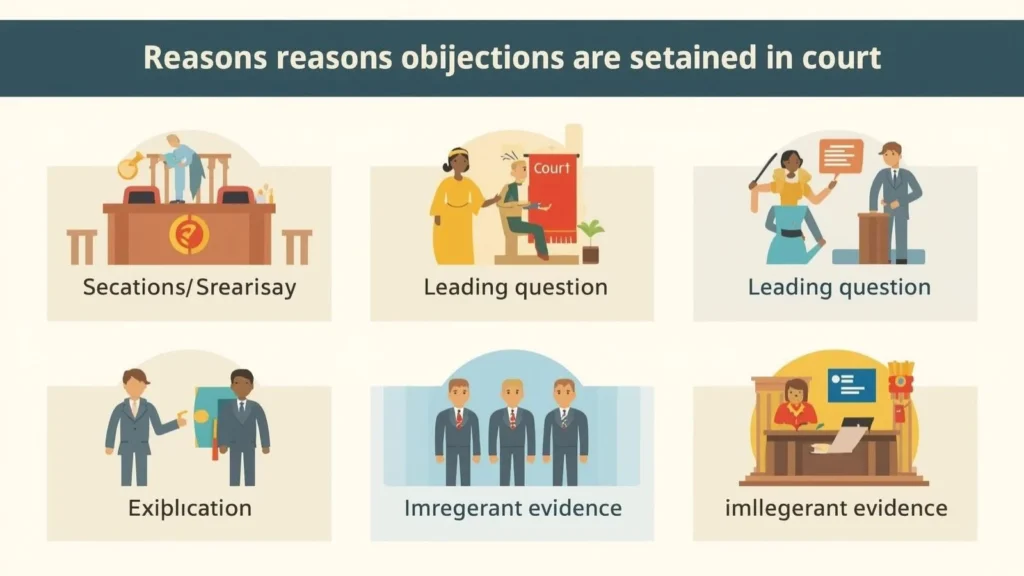
Some common reasons include:
Hearsay
When a witness repeats something someone else said instead of what they personally witnessed.
Example:
“What did your neighbor tell you about the crime?”
Leading Question
When a lawyer suggests the answer in the question.
Example:
“You saw the defendant leaving the store, didn’t you?”
Speculation
When a witness is asked to guess rather than provide facts.
Example:
“Why do you think the defendant committed the crime?”
Irrelevant Evidence
When a question has nothing to do with the case.
Example:
“Asking about unrelated personal history.”
When these situations occur, a judge ruling objection as sustained prevents improper testimony.
⚖️ Difference Between Sustained and Overruled
One of the most common legal questions is the difference between sustained and overruled.
These are the two possible rulings judges give after hearing an objection.
| Court Ruling | Meaning | What Happens Next |
| Sustained | Judge agrees with the objection | Question must stop or be changed |
| Overruled | Judge disagrees with the objection | Question continues and witness answers |
Example:
Lawyer: “Where were you on the night of the incident?”
Opposing Lawyer: “Objection! Leading question.”
Judge: “Overruled.”
Since the objection was overruled, the witness can answer.
💬 Real Courtroom Example of Sustained
Here is a simplified courtroom dialogue showing how the term works in real trials.
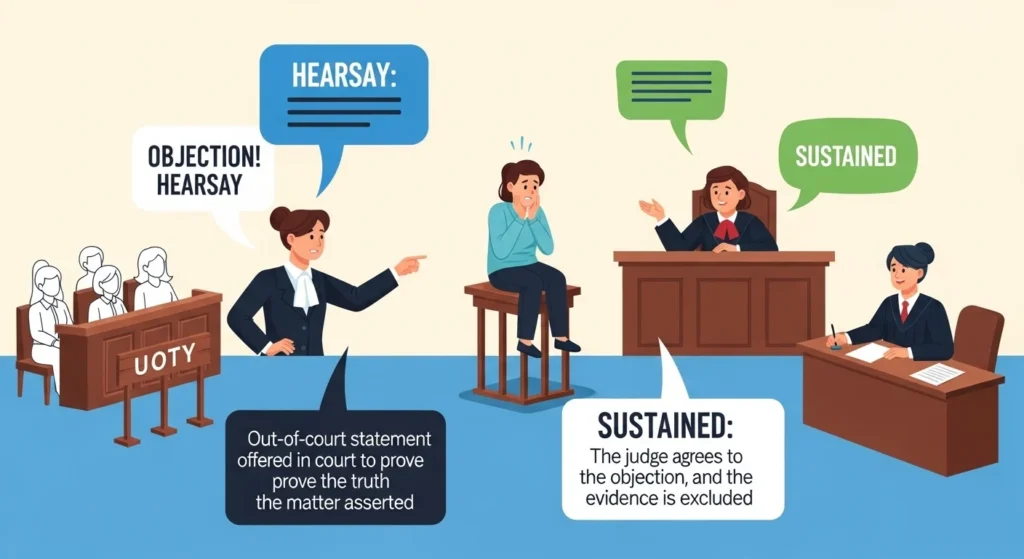
Prosecutor: “What did your friend tell you about the defendant?”
Defense Lawyer: “Objection, hearsay.”
Judge: “Sustained.”
Because the judge sustained the objection, the prosecutor must ask a different question.
This example shows how judge ruling objection decisions control what information is allowed during a trial.
📚 Why Judges Say Sustained
Judges say “sustained” to enforce the rules of legal proceedings and ensure a fair trial.
Courtrooms follow strict rules about:
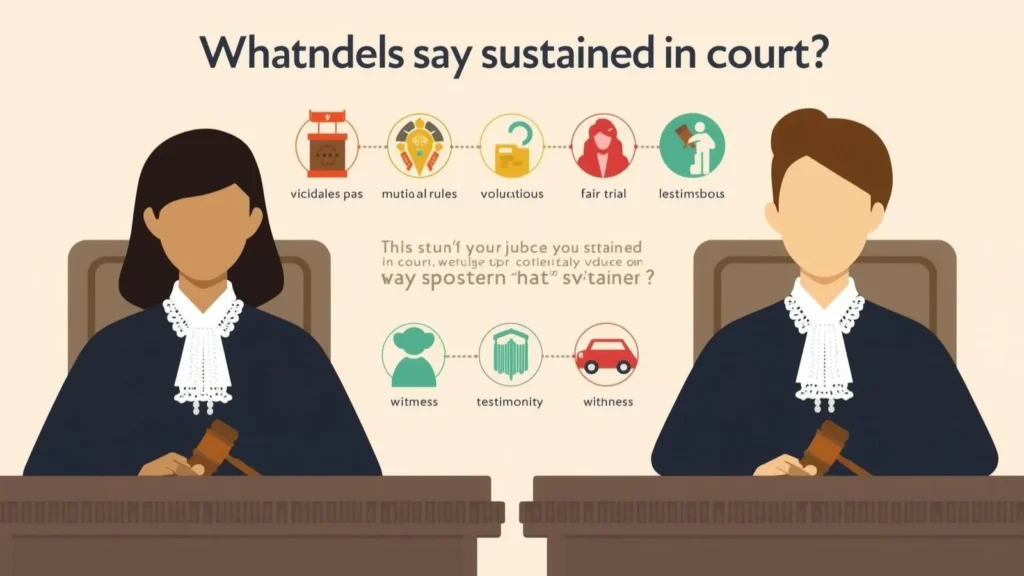
- Evidence
- Witness testimony
- Questioning methods
- Trial procedure
If lawyers ask improper questions, the judge uses rulings like sustained to maintain fairness and prevent unreliable information from influencing the jury.
This is why the term appears frequently in court transcripts, trials, and legal discussions.
🔄 Legal Terms Related to Sustained
Several related legal terms often appear alongside sustained meaning in court.
| Legal Term | Meaning | Usage |
| Objection | A lawyer challenges a question or evidence | During trial questioning |
| Sustained | Judge agrees with the objection | Question must stop |
| Overruled | Judge rejects the objection | Question continues |
| Testimony | Statements given by a witness | Evidence in court |
| Evidence | Information used to prove a case | Trials and hearings |
These terms form part of the basic courtroom terminology used in trials.
❓ FAQs About Sustained
What does sustained mean in law?
In legal terms, sustained means the judge agrees with a lawyer’s objection, confirming that the question or evidence violates courtroom rules.
What happens when an objection is sustained?
When an objection is sustained, the lawyer must stop asking the question, change it, or move to another topic.
Can a lawyer ask the question again after sustained?
Yes, but only if the lawyer rephrases the question to follow legal rules.
What is the opposite of sustained in court?
The opposite ruling is overruled, meaning the judge rejects the objection and allows the question to continue.
Is sustained good or bad in court?
It depends on perspective. The lawyer who raised the objection benefits because the judge agreed with them.
🔚 Conclusion
To summarize what does sustained mean in court, it is a legal ruling used when a judge agrees with a lawyer’s objection during a trial.
When an objection is sustained, the question or evidence being challenged cannot continue in its current form.
Understanding the sustained legal meaning, the difference between sustained and overruled, and how objections work helps explain how courtroom trials stay fair and follow strict legal rules.
In simple terms: Sustained = Judge agrees with objection = The question or evidence must stop. ⚖️

Andrew Michael is a visionary thinker and passionate creator, focused on turning bold ideas into real-world impact. His creativity and dedication inspire others to grow, achieve, and make a difference.
Leave a Comment