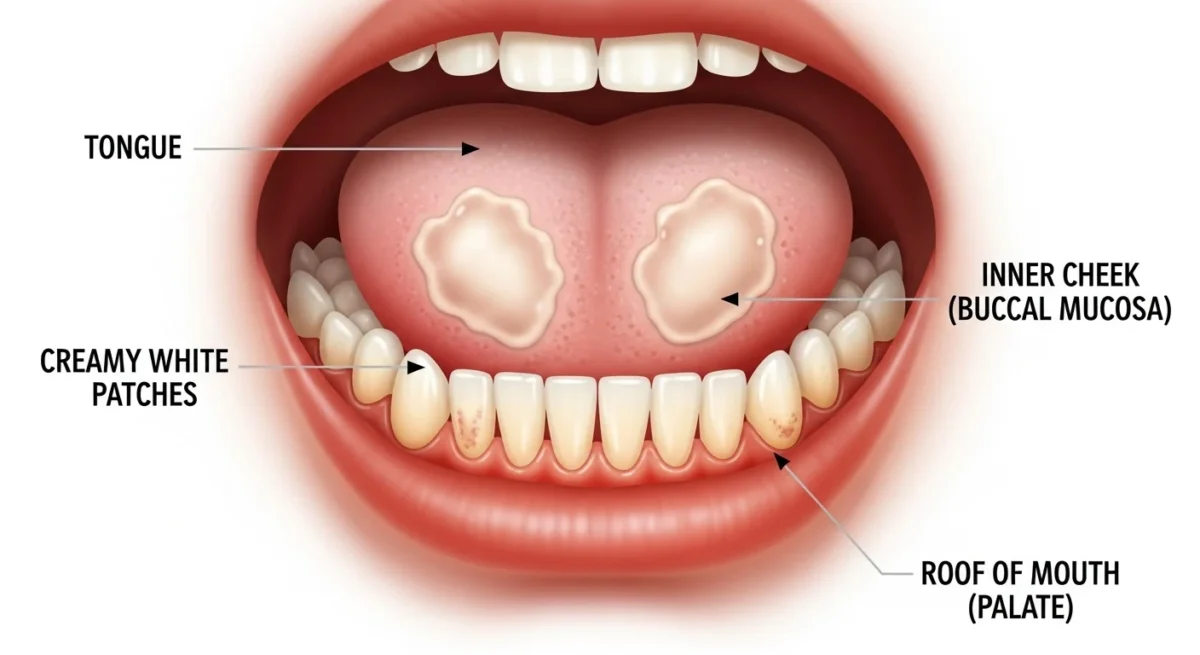
Have you ever noticed white patches in your mouth or a strange coating on your tongue and wondered, “What does thrush look like?” I remember panicking when I first saw it it looked like tiny cream colored spots that just wouldn’t go away.
Luckily, oral thrush is common, usually mild, and easy to treat if you know what to look for.
Quick Answer:
Thrush is a yeast infection in the mouth, caused by Candida overgrowth. It shows as white or creamy patches on the tongue, inner cheeks, or roof of the mouth.
It can cause soreness or a cottony feeling but is generally treatable and not dangerous in healthy adults.
🧠 What Thrush Looks Like: Symptoms and Signs
Thrush symptoms can vary, but here’s what to watch for:
- White or creamy patches on the tongue, inner cheeks, gums, or roof of the mouth
- Redness or soreness underneath the patches
- Cottony feeling in the mouth
- Cracking at the corners of the mouth (angular cheilitis)
- Loss of taste or unpleasant taste in the mouth
- Mild pain or burning sensation, especially when eating
Example sentence:
“I woke up with small creamy spots on my tongue — looks like oral thrush.”
In short: Thrush = Candida infection = white patches in the mouth that may cause discomfort.
📌 Common Locations of Thrush
Thrush often appears in:
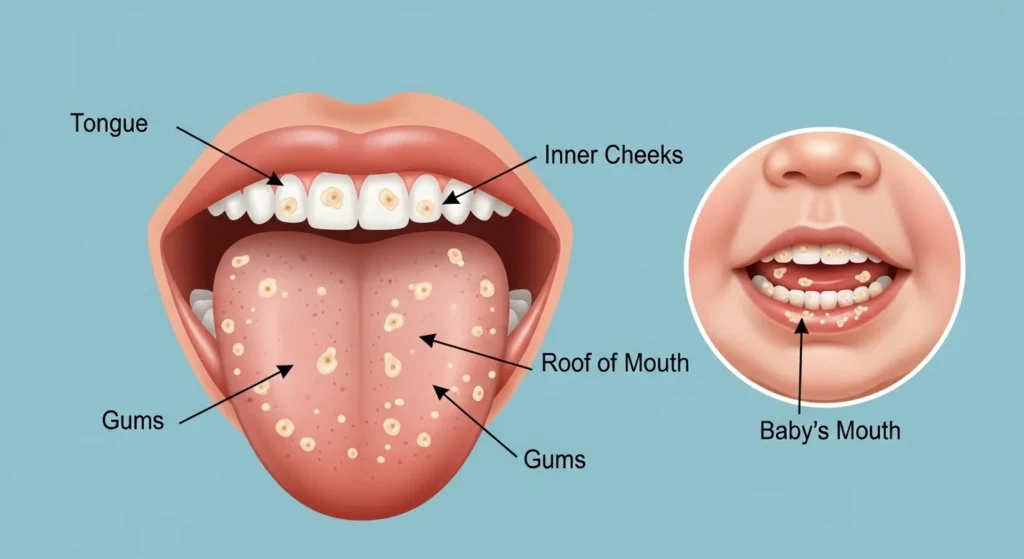
- 👅 Tongue — white patches, often on the tip or sides
- 🏥 Inner cheeks — creamy spots that may bleed when scraped
- 👄 Gums and roof of mouth — red and irritated under patches
- 👶 Babies’ mouths — very common in infants (baby thrush)
- 🧑⚕️ Adults with weakened immunity — patches may spread to throat
Tip: Thrush is common in babies, older adults, and people with diabetes or recent antibiotics.
💬 How Thrush Appears in Real Life
Here’s a visual description for comparison:
| Area | Appearance | Symptoms |
| Tongue | White, creamy spots or plaques | Cottony feeling, soreness |
| Inner cheeks | Irregular white patches | Mild pain, redness underneath |
| Roof of mouth | White or yellowish spots | Irritation or burning |
| Gums | White or grayish coating | Tenderness or minor bleeding |
| Baby’s mouth | Tiny white spots, sometimes on lips | Fussiness, feeding difficulty |
Pro Tip: The patches may look like cottage cheese, but unlike food residue, they don’t wipe off easily.
🕓 Causes and Risk Factors
Thrush happens when Candida yeast grows uncontrollably. Common causes include:
- Taking antibiotics or corticosteroids
- Weakened immune system (HIV, cancer treatment)
- Diabetes or high blood sugar
- Poor oral hygiene
- Baby thrush from passing yeast during breastfeeding
💊 How to Treat and Prevent Thrush
Treatment options:
- Antifungal medications (lozenges, gels, or mouth rinses)
- Good oral hygiene — brushing and rinsing
- Limit sugar intake — yeast thrives on sugar
- Sterilize pacifiers and bottles for babies
- Stay hydrated and maintain a balanced diet
Prevention tips:
- Rinse your mouth after using inhalers
- Replace old toothbrushes regularly
- Manage blood sugar if diabetic
- Avoid sharing utensils or toothbrushes
✅ When to Seek Medical Help
- Thrush doesn’t improve after 1–2 weeks of treatment
- You have severe pain, difficulty swallowing, or fever
- You have weakened immunity or serious health conditions
🔄 Similar Conditions: How to Tell Them Apart
| Condition | Appearance | Key Difference from Thrush |
| Oral Lichen Planus | White lacy patches | Usually symmetrical, chronic |
| Geographic Tongue | Smooth red patches with white borders | Patches move over time |
| Leukoplakia | Thick white patches | Cannot be scraped off, may need biopsy |
| Cold Sores | Fluid-filled blisters | Caused by herpes, not fungal |
| Yeast Infection (Candida) | Candida overgrowth elsewhere | Thrush is specific to mouth |
❓ FAQs About Thrush
Q1: Can thrush spread from person to person?
A1: Rarely in healthy adults, but infants and immunocompromised people are more susceptible.
Q2: How long does thrush last?
A2: With treatment, usually 1–2 weeks. Mild cases may clear naturally.
Q3: Can adults get thrush?
A3: Yes, especially after antibiotics, steroids, or with diabetes.
Q4: Can thrush cause bad breath?
A4: Yes, it may cause a slightly sweet or unpleasant taste in the mouth.
Q5: Is thrush dangerous?
A5: Usually mild in healthy individuals. Complications are rare unless immunity is low.
Q6: How to prevent baby thrush?
A6: Keep bottles/pacifiers clean, and consult a pediatrician if symptoms appear.
Q7: Can thrush affect the throat?
A7: Yes, severe cases in adults may spread to the throat, causing soreness or difficulty swallowing.
✅ Conclusion
Understanding what thrush looks like can help you identify it early and get the right treatment.
Look for white or creamy patches on the tongue, cheeks, gums, or roof of the mouth, often with mild soreness or a cottony feeling.
Thrush is a common fungal infection caused by Candida overgrowth, not dangerous for healthy people, and easily treatable with antifungal care.
In short: Thrush = white patches in mouth = treatable fungal infection. 🦷

Mason Olivia is a passionate innovator and storyteller who believes in creating with purpose. Blending creativity and vision, Mason inspires others to dream bigger and achieve more.
Leave a Comment